I’m not sure what I was expecting in Hay, but it wasn’t…Hay.
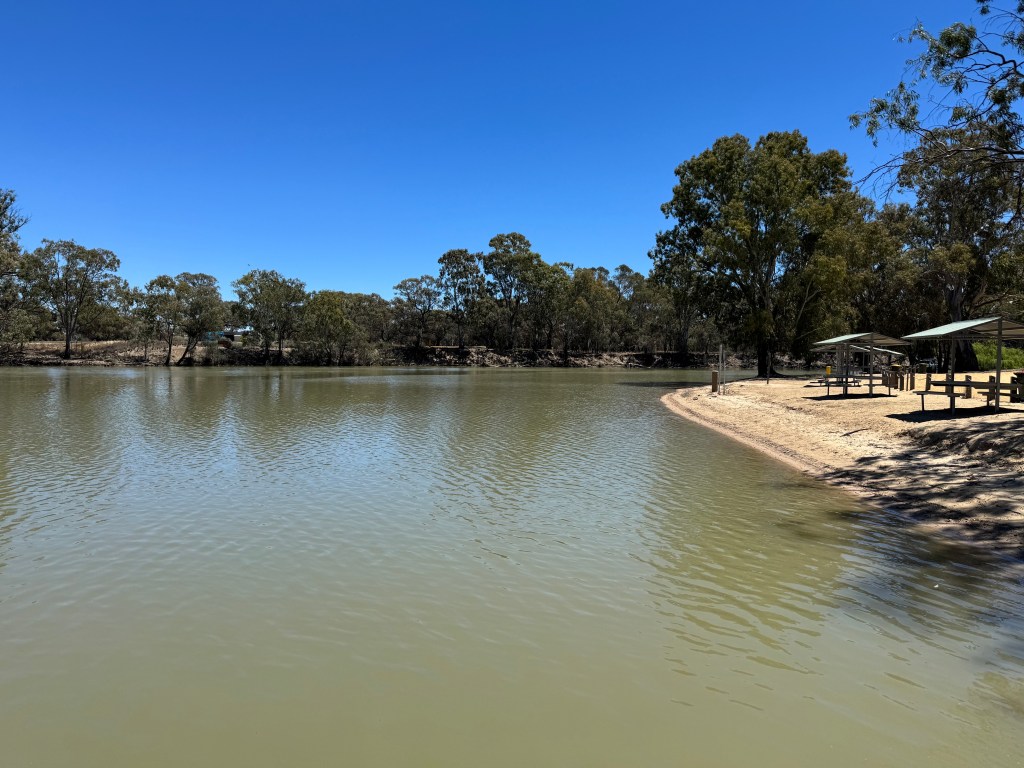
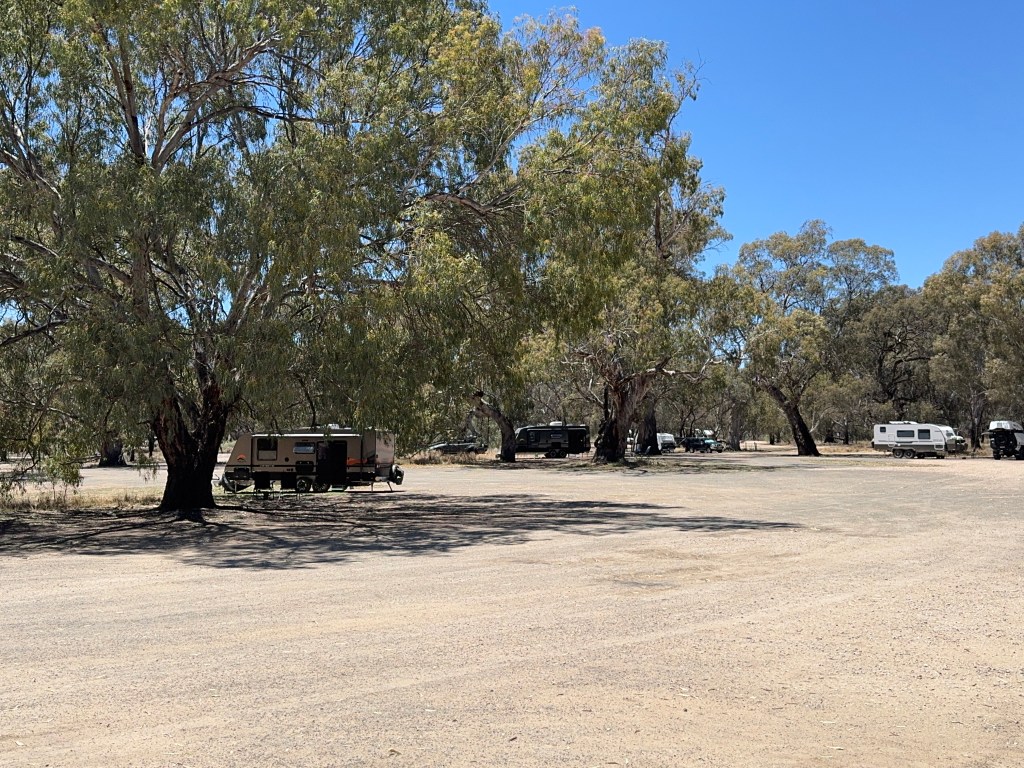
Our plan here was just an overnight stop over to break up the drive to Mildura, even though it’s only a couple of hours drive from Narrandera. We pulled into our second free camp – Sandy Point campgrounds. I had warned Mark, that giving Brewery Flats 5 out of 5 was dangerous territory because it left him nowhere to go, and as usual, I was proven right. Like Brewery Flat, Sandy Point is on the banks of the Murrumbidgee, but the river is wider here, and the bank is…well…sandy. You can camp among the river gums and there is plenty of space.
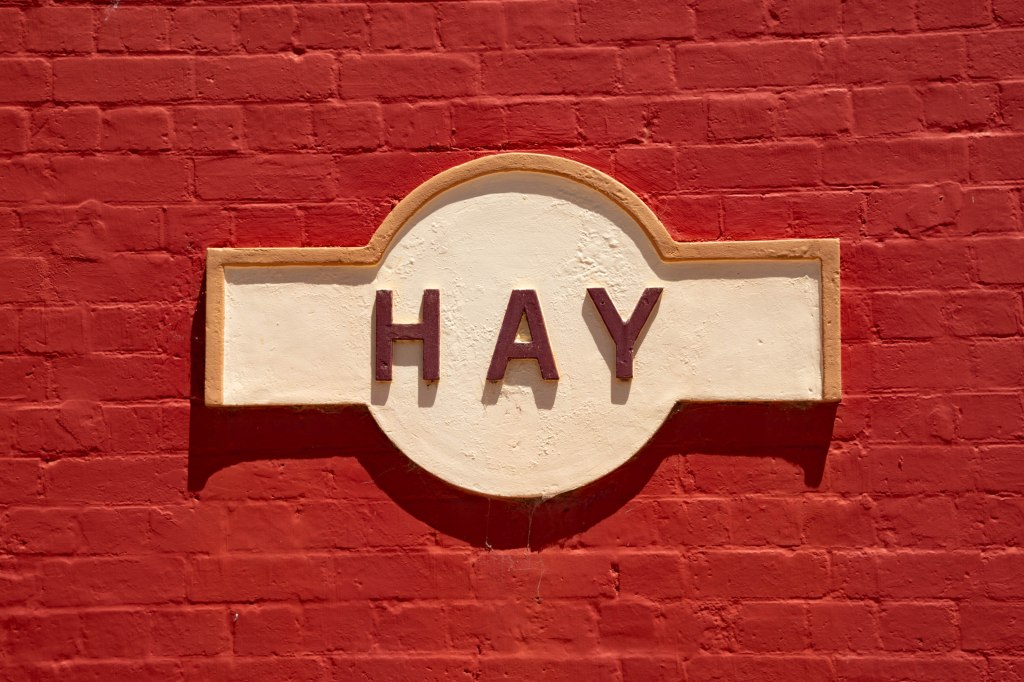
We arrived mid-morning, so headed to the Tourist Information Centre to see if there was anything we could do to kill the time. From the minute you pull up, you can tell that Hay is a town that wants, and embraces visitors. The information centre is modern, offers free showers, free push bike hire and has a tap (with a fitting!) out the front where you can fill your tanks. Inside, the girl at the desk is friendly and welcoming and when you ask her what she recommends you see, she gets busy with her pen and rattles off a dozen things to see in this speck of a town, and we realised you couldn’t hope to do justice to them all in one day. So we chose three: the Dunera Boys Museum, the old gaol and the Bishop’s residence.
Now here’s the thing that struck me about Hay. They really can’t have much of a crime problem, because for all of most of these attractions, you just rock up, pay $5 either by swiping you card on an unmanned machine, or popping cash into a donation box. And then you just waltz on in and wander around and don’t encounter another soul.
I had heard of the Dunera Boys in that I remember a 1980s mini-series of that name, but I had never seen it and so knew nothing about them. When Hitler started smashing windows and burning books, Germans who saw the signs, knew they were in his cross-hairs and had the means, fled their homeland for Britain. The British were happy enough to have them there, until Hitler looked like he was going to attack, so the government rounded up all these refugees along with some Italians and others who they now saw as potential enemies, and not for the first time in their history, shipped off these unwanted to Australia. A bunch of them arrived on the ship the Dunera, and these men found themselves in Hay, where they were imprisoned during the night and sent off to work on properties during the day. As being a prisoner of war, which effectively they were, to be a Dunera Boy in Hay probably wasn’t the worst thing that could happen to you. In fact at the end of the war, 900 of the original 2500 Dunera Boys chose to remain in Australia.
After the Japanese entered the war, Hay was used as used to intern Japanese citizens and house POWs, although it is not as well know as Cowra, because of the famous break-out there.
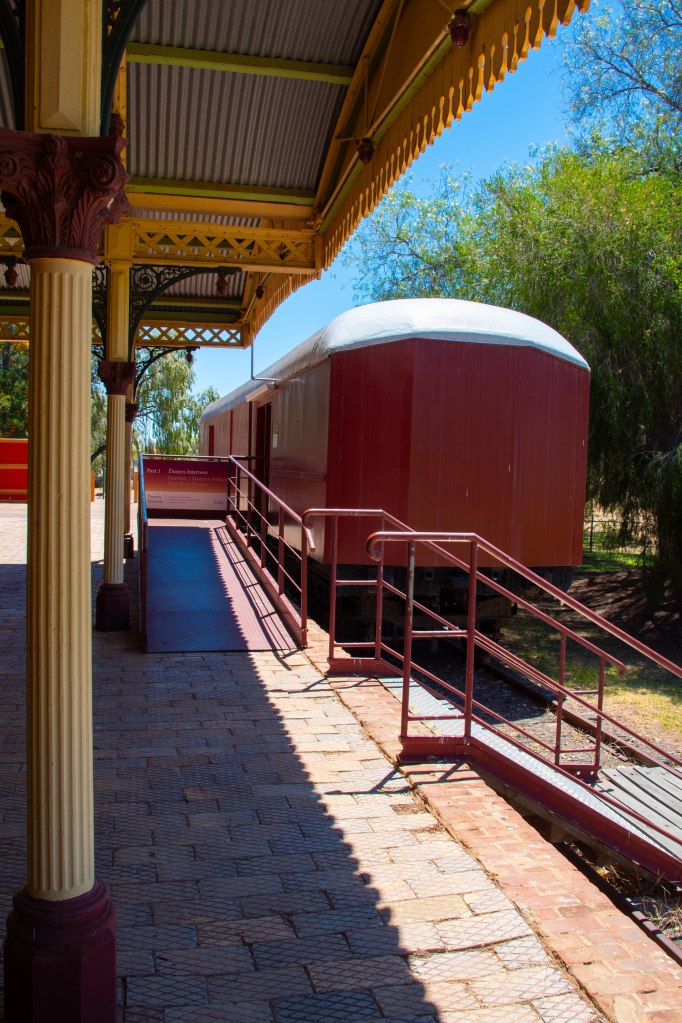
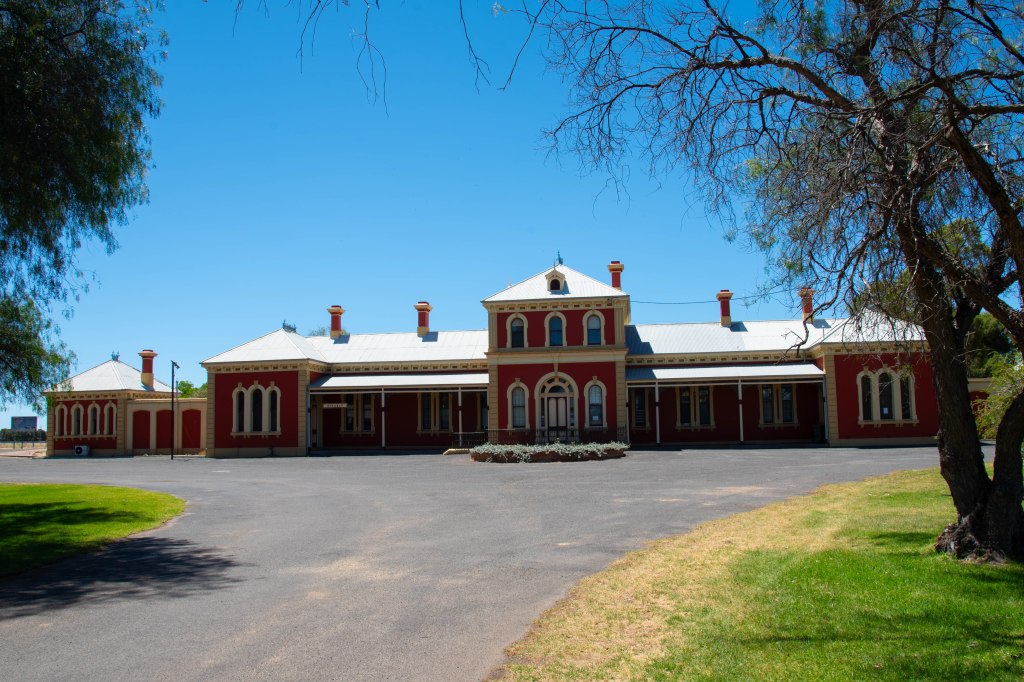
The Dunera museum is uniquely housed in two railway carriages which are permanent sat at the beautifully restored, but no longer used, railway station.
From there we headed to the old jail. Again, just pay via the honour system and in you go. This one even has free barbeques so you can have a picnic lunch in the grounds, which are beautiful. It is not set up as a jail, more a museum of the usual old bottles and old washing machines that typically make up any country museum, but it is certainly worth stopping to smell the roses – literally. There is a wide variety of roses in the beautifully kept grounds.

In fact, what we noticed as we drove around Hay is that almost all of the gardens in almost all of the houses are immaculate, with lush green lawns and pretty flower beds. It makes you feel like the people of Hay are very proud of their town.
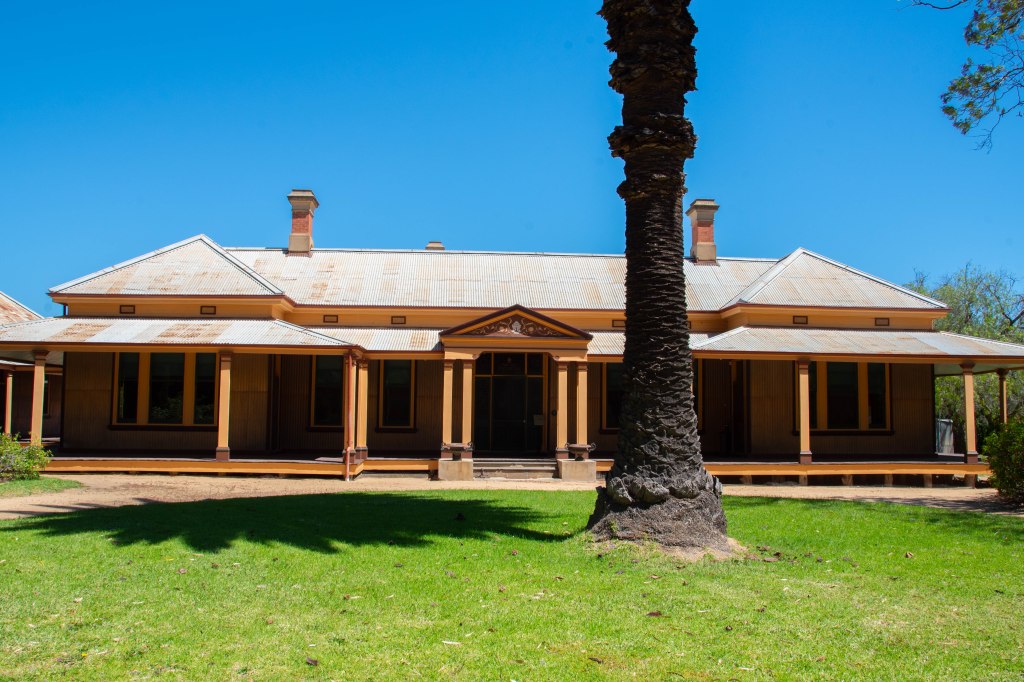
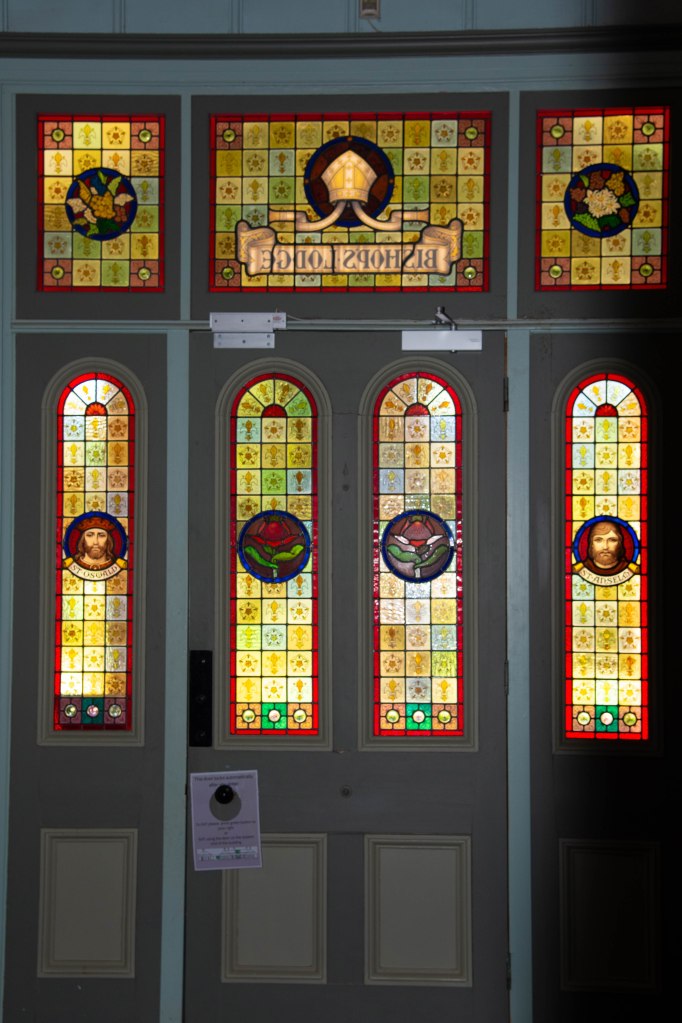
The last landmark we visited was The Bishops Lodge, which you can see from the highway as you enter from the Narranderra side. Again, you just open a gate and you are free to wander through the lush garden. The entry to the main house is a little different int that you have to press an intercom, which puts you through to the girl at the tourist information centre. She unlocks the door remotely, but then it’s back to the old honour system and you can wander around the old house to your heart’s content. The old house was built in the late 1800s and was home to a couple of bishops before beings sold to a succession of private families, before the council bought it back again, restored it as a bicentennial project and opened it to the public. It now has a commercial kitchen so that functions can be held there. I imagine it would be an amazing wedding venue. I’m not sure how many brides come out of Hay annually, but there are plenty of motor inns, the caravan park, and of course, the free camp to house the out of towners.
Hay is also well-serviced for everything you need and all of it is on Lachlan Street. Just outside the IGA is a bench, and every time we drove past it was occupied by tow women, whose job it seemed was to heckle anyone who couldn’t master the reverse angel parking. They certainly seemed to enjoy it.
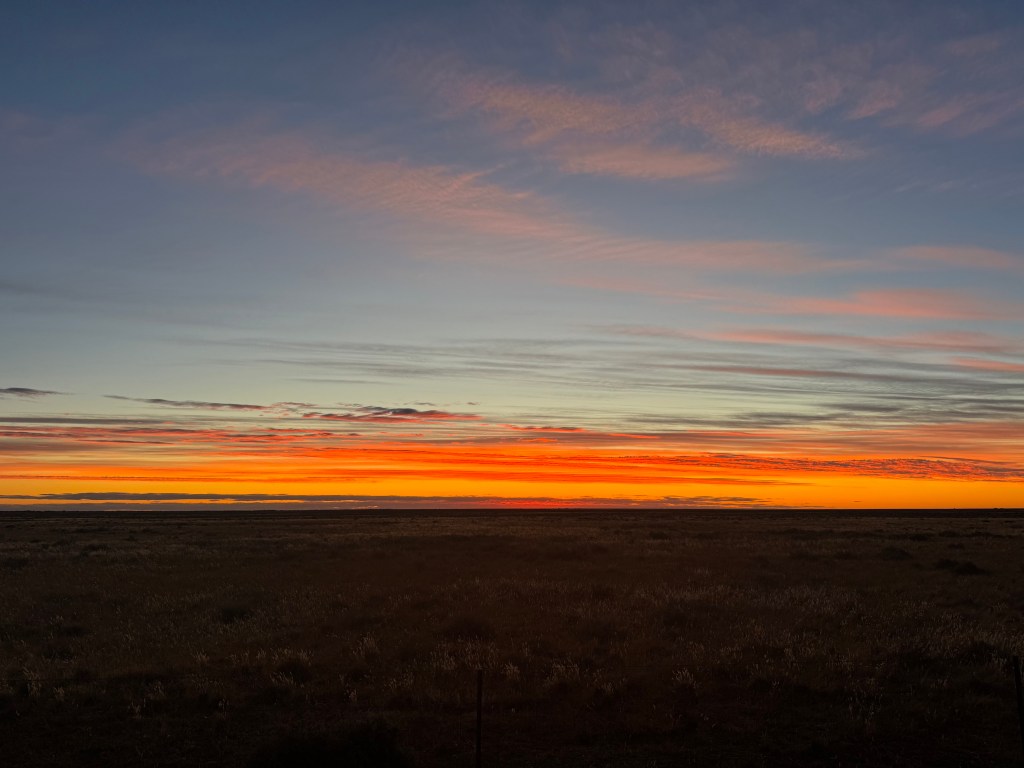
We picked up a couple of nibblies and then headed out of town, 16 kilometres to the sunset viewing area – basically a graded bit of dirt by the side of the highway where you can safely watch the sun drop behind the seemingly endless plains. We were lusky enough to have a little bit of cloud to give us a spectacle. The drive back is a little hairy – rabbits and hares, kangaroos, and unidentified bird darting in front of you or menacing to from the side of the road. But this is a must do in Hay.
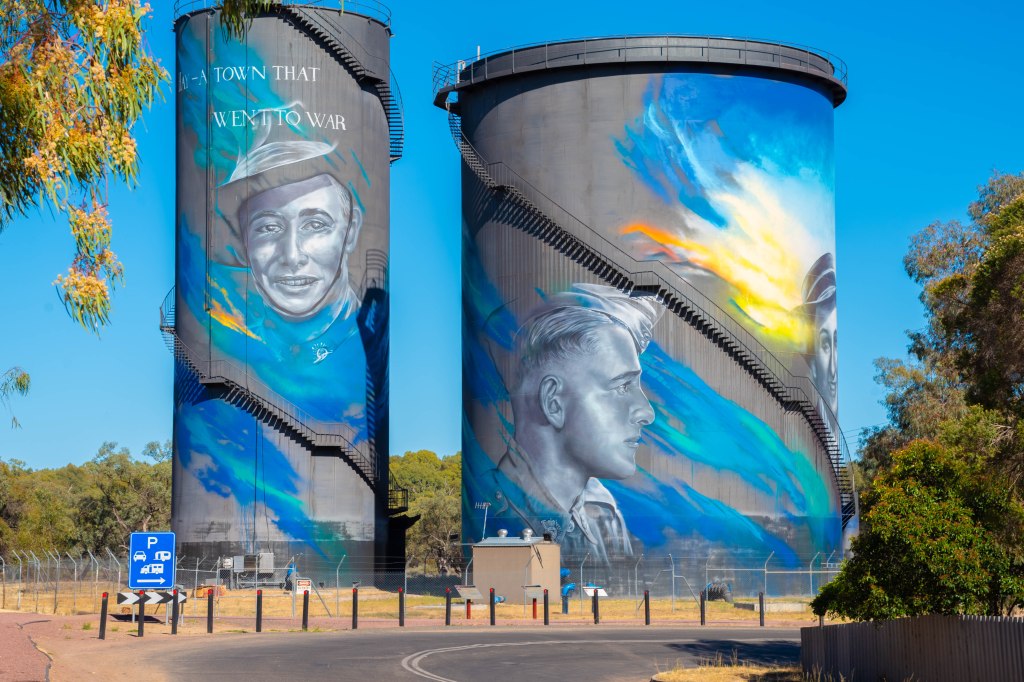
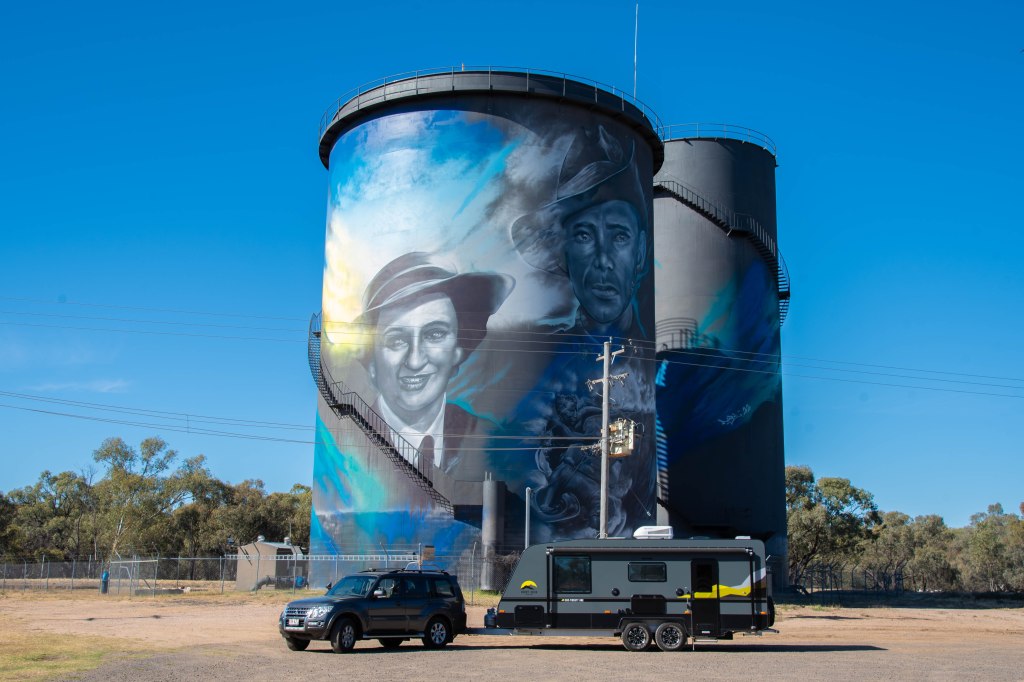
Then finally, just before we left the next day, we stopped by the most impressive landmark in Hay, the twin water towers adorned with murals honouring those who served in war. They really are spectacular.
Now, we only had half a day in Hay, and we couldn’t see all the town had to offer. When we returned to the free campground, we noticed that probably about three-quarters of the people there hadn’t bothered to unhitch from their campers, so for them it literally was stop over to sleep before hitting the road again in the morning. So unless they were catching a courtesy bus to the Sports and Fitness Club (bistro open 7 days a week!), they were really missing out.
I think the little township of Hay is a precious find – dare I say, like a needle in a haystack?
 The Tent, The Trailer, The Caravan
Leave a comment