Tag: australia

  • Day 24-25 – Mount Gambier

    Day 24-25 – Mount Gambier

    We left Kingston SE and headed for Mount Gambier, stopping off for a coffee in Robe.  Robe is very pretty, much bigger than Kingston and far more touristy. According to the guy who was sitting next to me at the Supercars, you can get an excellent fish chowder in Robe.   No time to seek that out since we were just passing through, and definitely not something I would seek out for breakfast.

    We arrived in Mount Gambier and our GPS took us to the Pine Country Caravan Park and thanks to its convoluted directions, it felt like we must be out in the boondocks somewhere.  Nonetheless, the park is a very pretty one with drive-through, lushly grassed sites. As soon as we set up, we set off to find Mount Gambier’s famous Blue Lake, and discovered it was about a kilometre away, just over the hill.

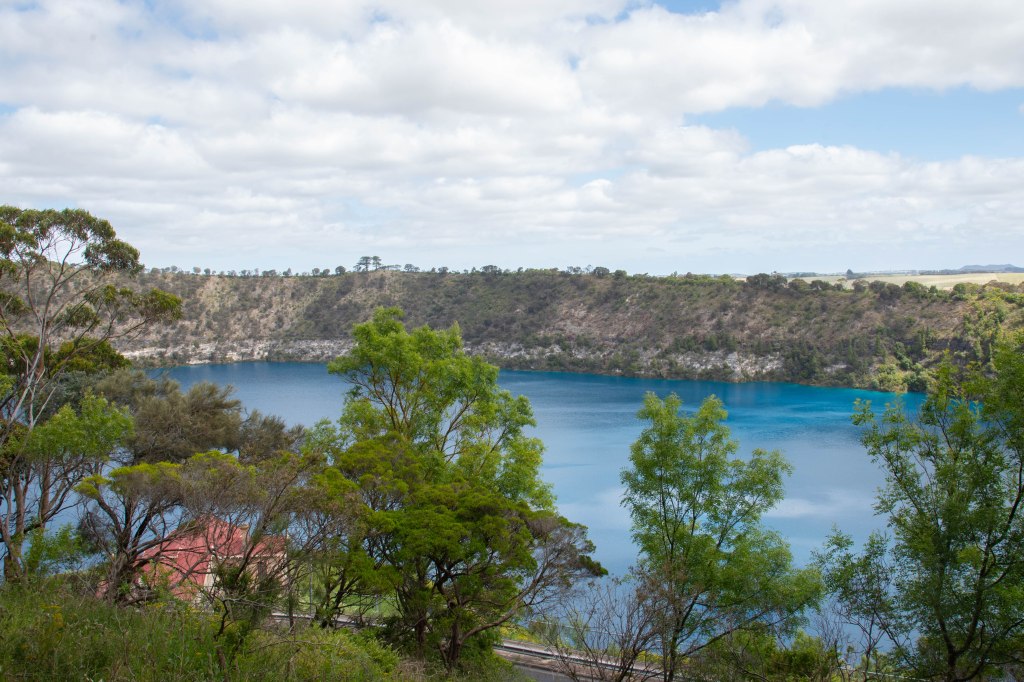
    Now,  I knew there was a Blue Lake at Mount Gambier, obviously. It’s the reason we decided to have a stop over here, and of course I have seen photos of it heaps of times.  But I don’t think anything can prepare you for the first glimpse of it.  It really takes your breath away and the blue is mesmerising.  There is a road that goes right around the top, and I really don’t understand how there aren’t constantly accidents, because it is hard to keep your eyes on the road. 
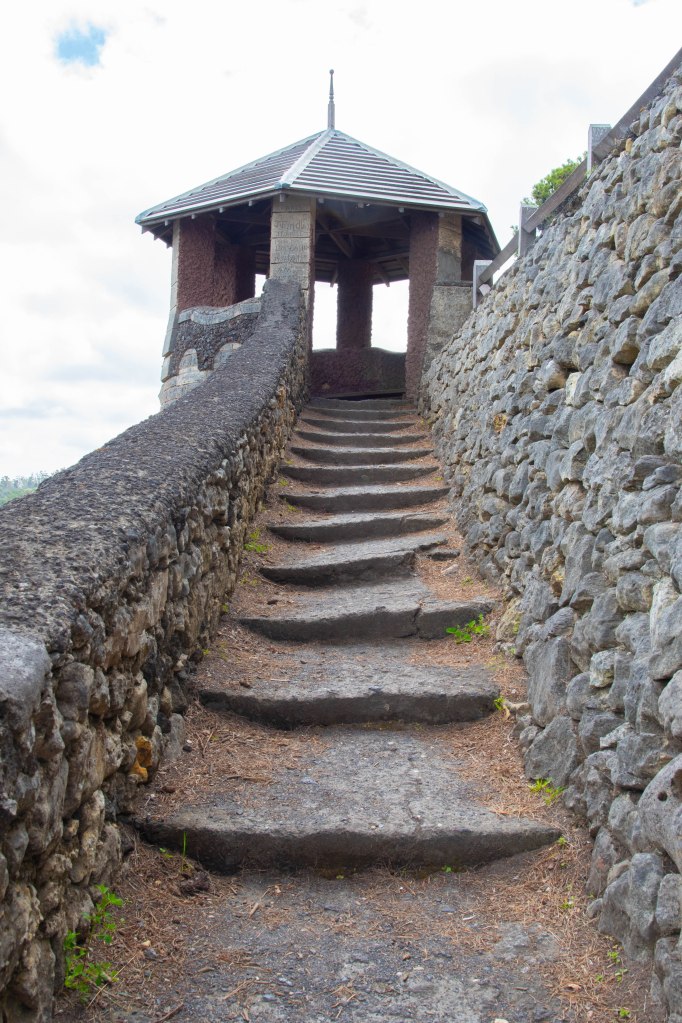
    Thankfully, the city of Mount Gambier has made several places where you can stop and take it all in.  One of these features a little turret made of stone which is at the end of walking path which follows a man-made rock wall.  What is amazing about both these structures is that they were built by volunteers  – seven hundred of them, including school children!  These days you’d be flat out getting a dozen people to a working bee at their kids’ soccer club, but such is the pride of the townsfolk for this lake. 

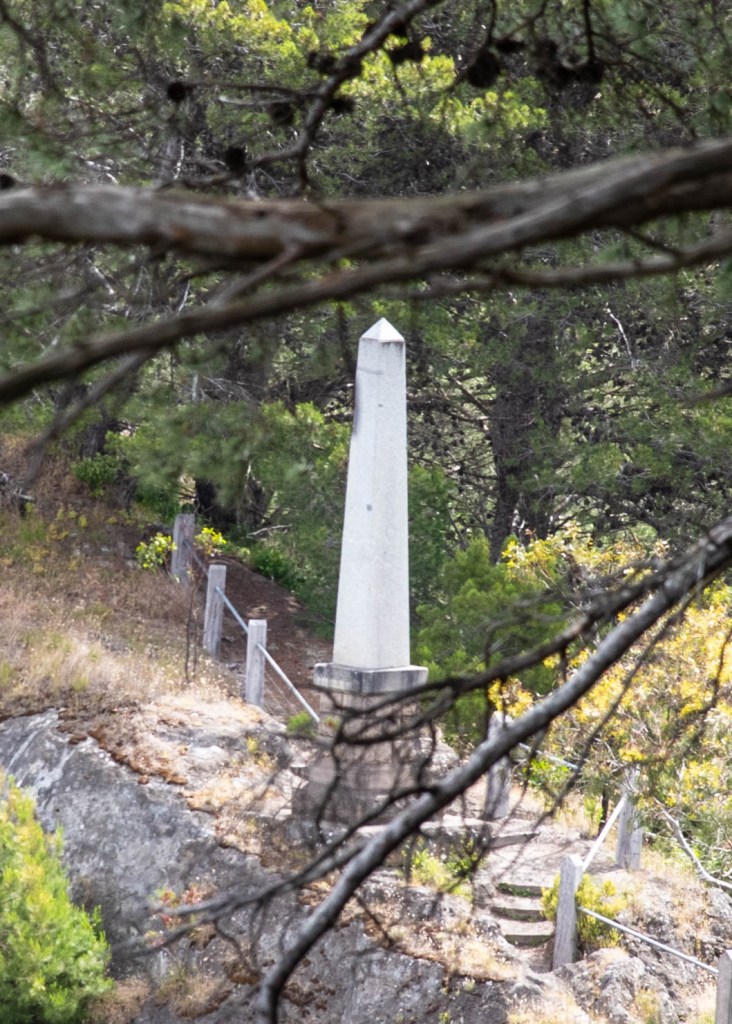
    Nearby is an obelisk dedicated to the poet Adam Lindsay Gordon.  He was not born in Mount Gambier, nor did he die in Mount Gambier, but apparently at one time he was riding a horse and he leapt over the barricade, landing on a narrow ledge and then jumping back over again.  Kind of a “Man from Snowy River” stunt, except Banjo Paterson hadn’t invented him yet. Once you see the sheer cliffs surrounding the lake, you can appreciate how impressive a feat this was.  Obelisk-worthy at the very least. 
    Further along is another viewing platform which appears to be commandeered by lovers, judging by the number of locks which adorn the fence.  It just like they do to bridges in Paris – or in Neighbours where countless couples proclaim their love down by the brown sludge that is Lassiter’s Lake.  
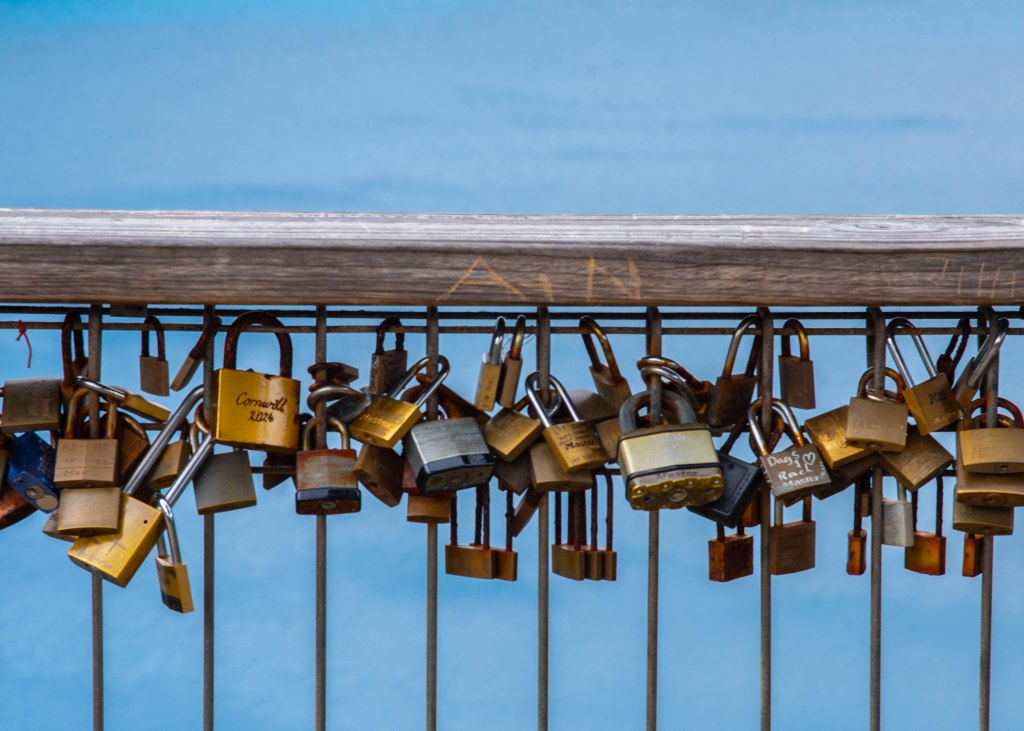
    The idea of course is that you get a padlock, etch your name and that of your true love onto the lock, affix it to the fence and throw away the key, symbolising your everlasting love.  By that logic, the bottom of Blue Lake must be littered with keys.  I must say though, there were a number of couples who had combination locks and if my bloke turned up with one of those, I don’t think I’d be sticking around. Clearly he has commitment issues.
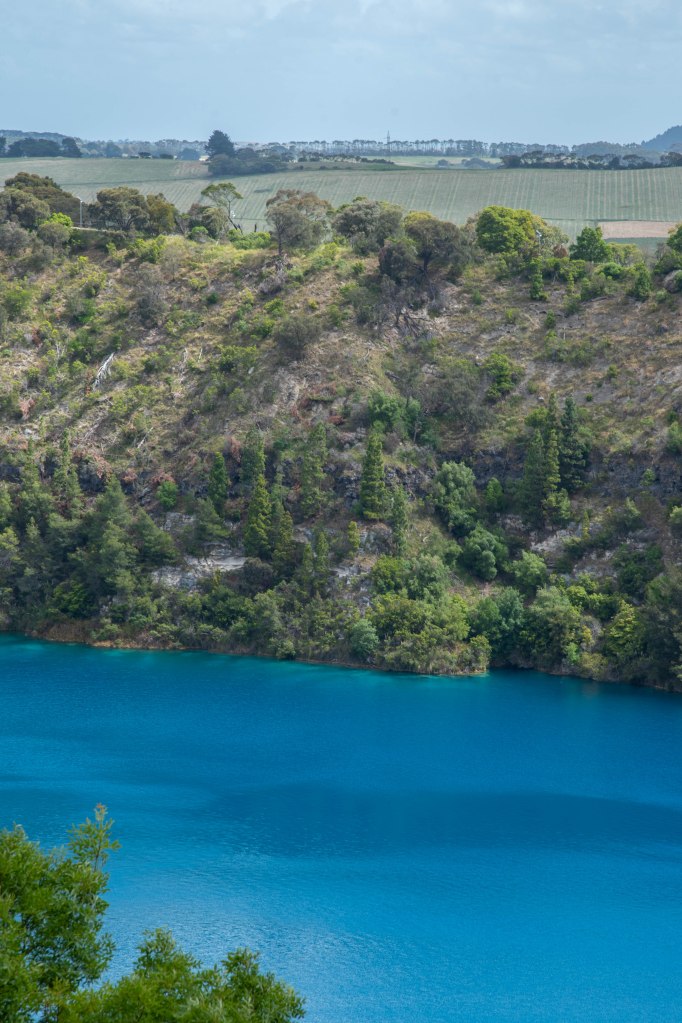
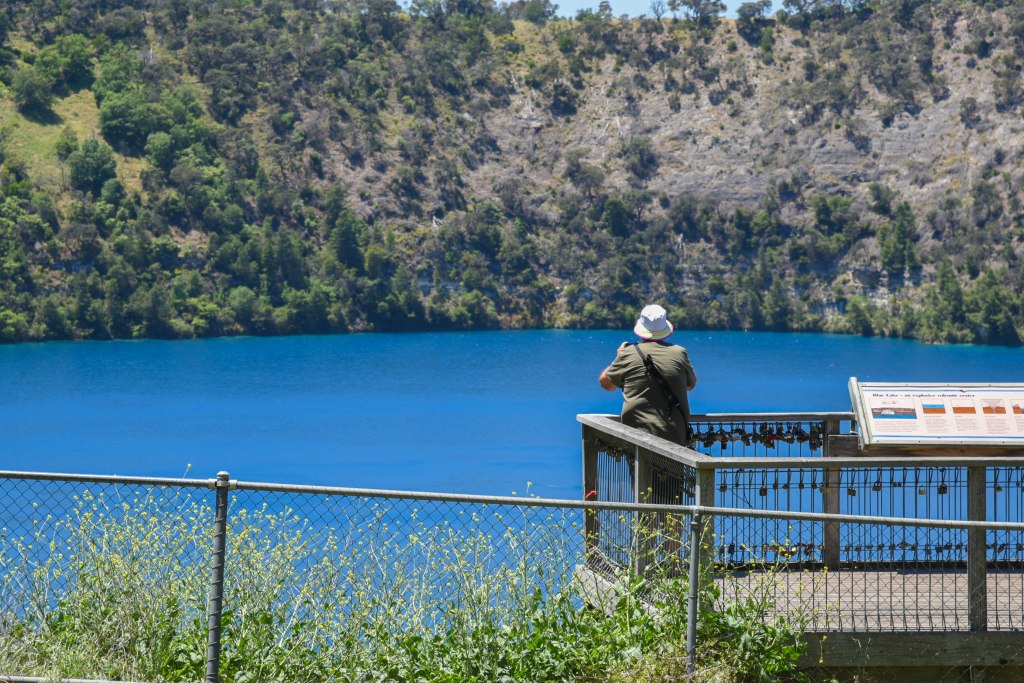
    Blue Lake is located in a volcanic crater, but what struck me about this is that the volcano last erupted only four and a half thousand years ago.  I say only, because Australia is home to the world’s oldest living culture – around sixty thousand years old – which means that there were people here for the life, and death of that volcano, and the gradual formation of the lake.  Of course, I know that people live around volcanoes, but I guess because you typically don’t think of Australia as being a land of fire in that sense, it makes my brain hurt a little bit thinking about it.  I am sure the Boandik peoples, the traditional custodians, have stories about it all, but that will have to wait for another visit. I’m sure we will be back to Mount Gambier one day, because if I heard Mark say, “Mount Gambier delivers” one more time, I think I was going to throttle him.

    On the other side of the hill there is a second lake – Valley Lake.  This one isn’t blue, but you can swim in it, as long as you pay heed to the “Danger: Deep Mud” signs.  There is a section with a little beach which must be incredibly popular during the summer months. A third lake – Brown Lake – no longer has any water in it, but this is now beautiful parklands, complete with a frisbee golf course.
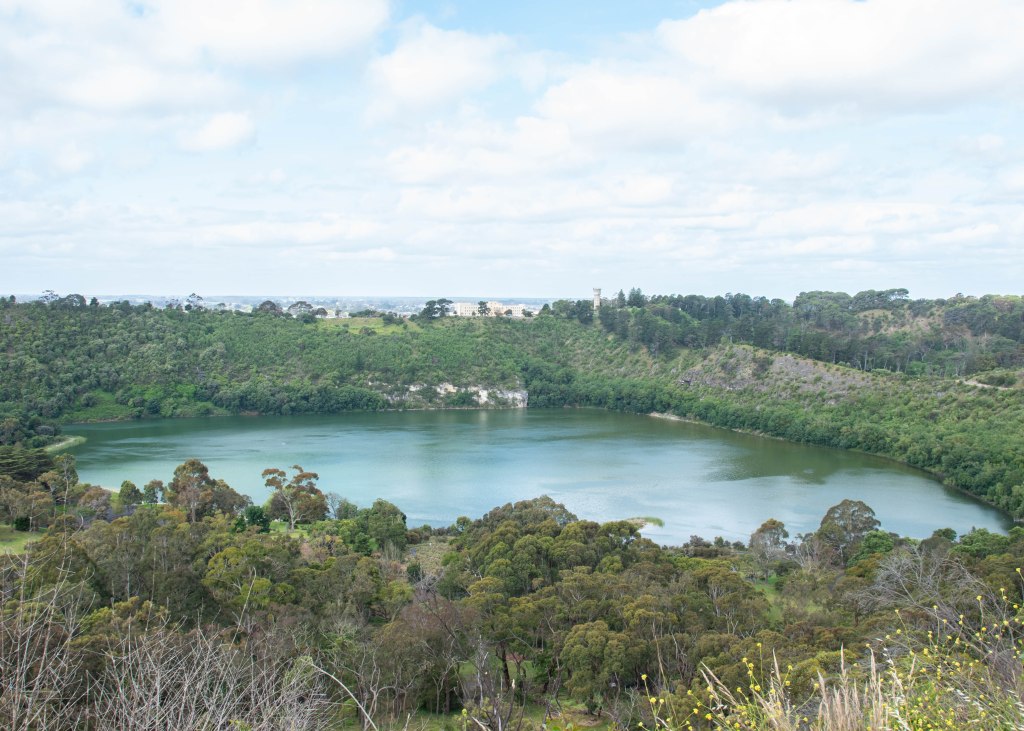
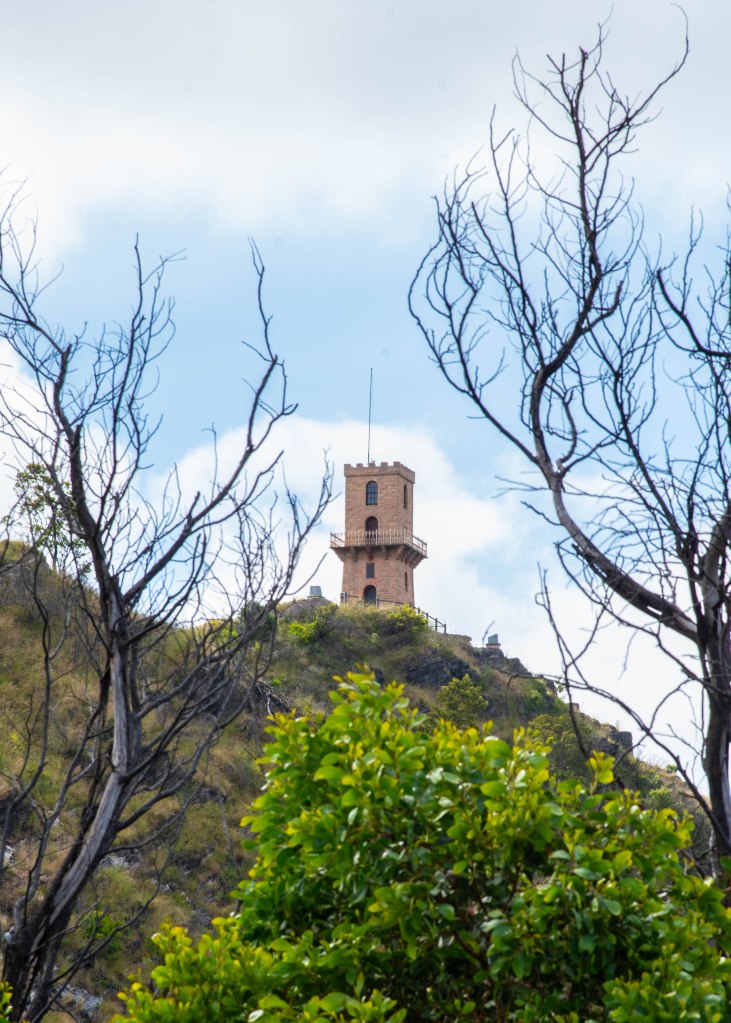
    Now if you really want to get a great vantage of not just the lakes, but the city and the farmland beyond, then a hike up to Centenary Tower is a must. My dodgy knees got me half-way up the hill, where there is a conveniently placed bench, making me think that there are a few dodgy knees that attempt the the trek.  Mark got all the way up to the base of the tower.  He didn’t need it, but a defibrillator was there if he had !  Actually, there are defibrillators all over the place in South Australia, so it must be some sort of government regulation.
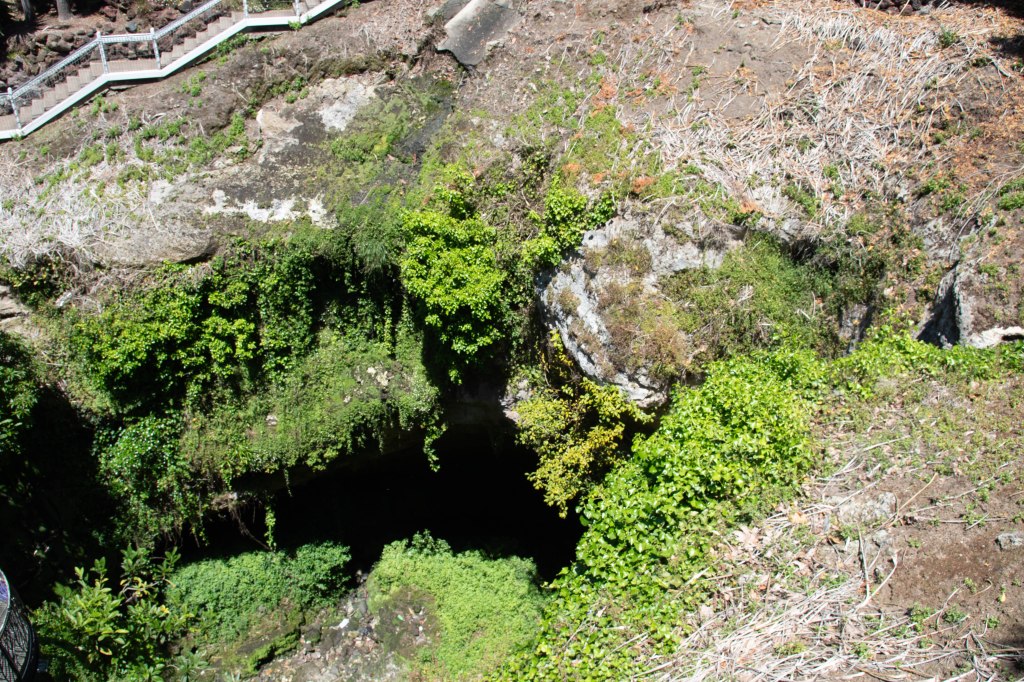
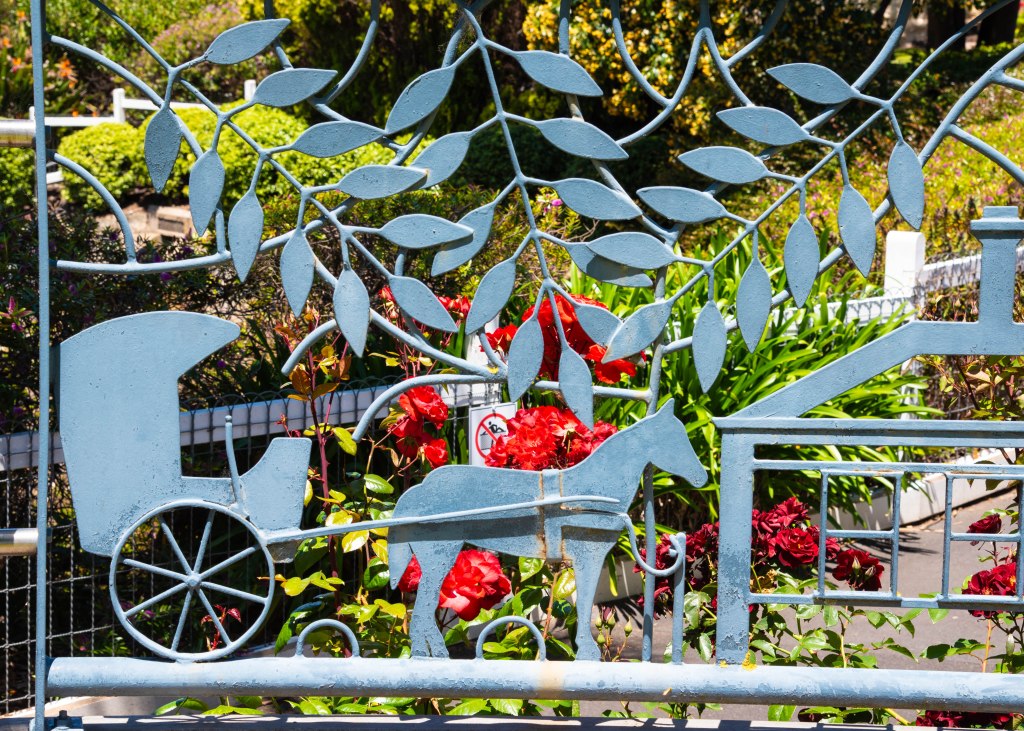
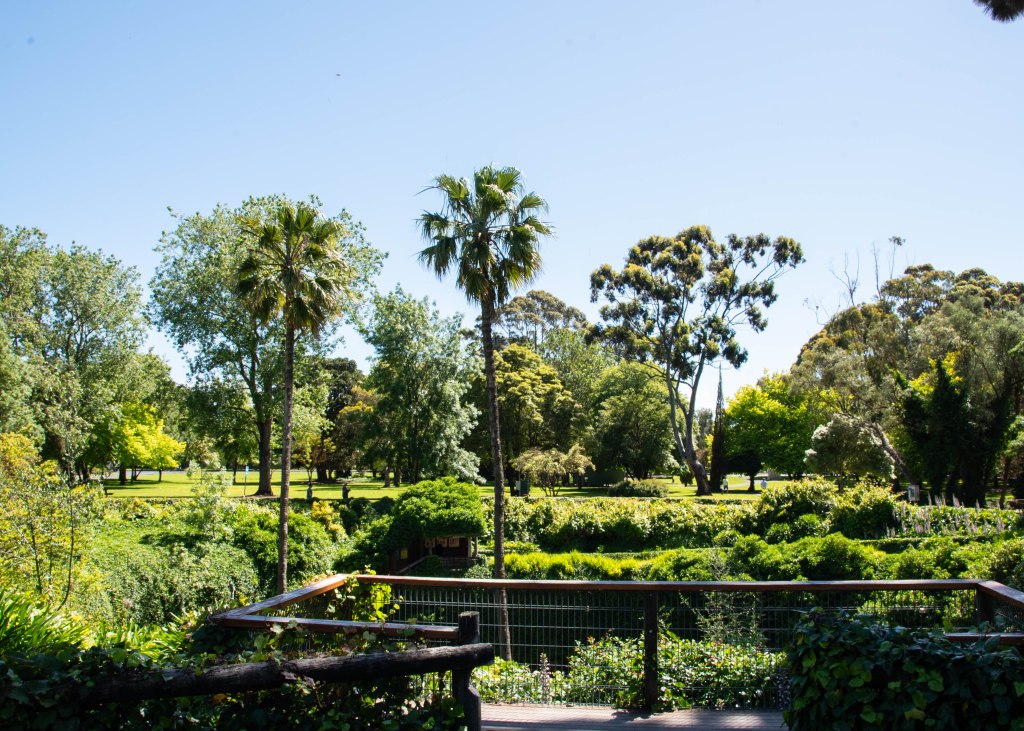
    Not only does Mount Gambier have the lakes, but the past volcanic activity has left the landscape dotted with caves and sinkholes.  If you go to the tourist information centre, they will point you in the direction of the Umpherston Sinkhole, so most people visit this one first.  I would not recommend this, because no other sinkhole will compare!  I recommend visiting Cave Garden first. It is located smack bang in the middle of the city centre, right next to the Riddoch Arts and Cultural Centre.  The gardens are beautiful, designed in the style of the 1920s with rose gardens mixed with natives. Then you meander down the path and look down and you go “Oh my God!  Look at that sink hole!” And then you will probably notice the rubbish that accumulates at the bottom and wonder how often some poor council worker has to abseil down there and clean it out.
    There is also this statue that has been commissioned by the council. It’s supposed to represent, “the natural history of the Limestone Coast…palaeontological megafauna , and prehistoric marsupials…”:
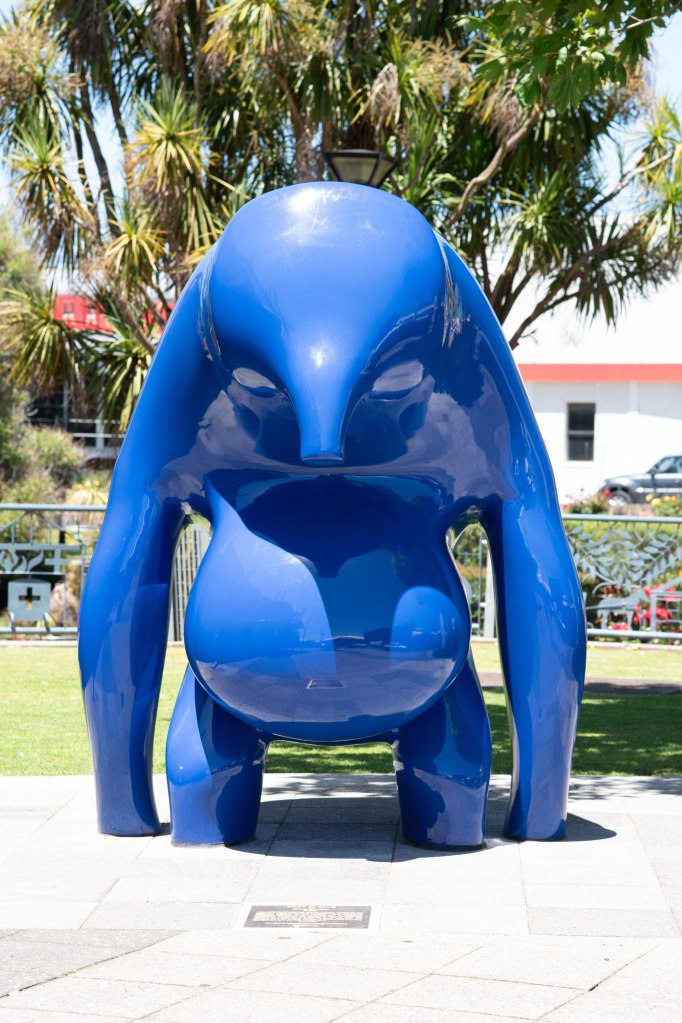
    Got it.

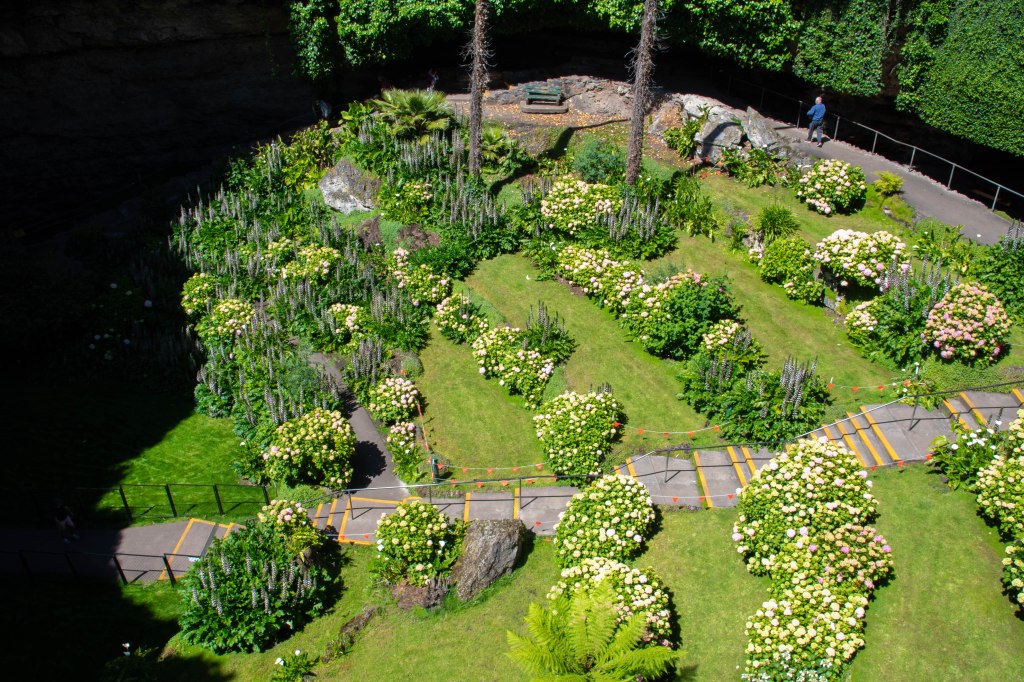
    The Umpherston Sinkhole is located on the way out of town, just past the race-course and is surrounded by the sawmill.  Sounds lovely, doesn’t it?  But in the midst of all of piles of lumber, lies yet another gorgeous park, and in the centre of that is the sinkhole.  Wow.  Wow. Wow.

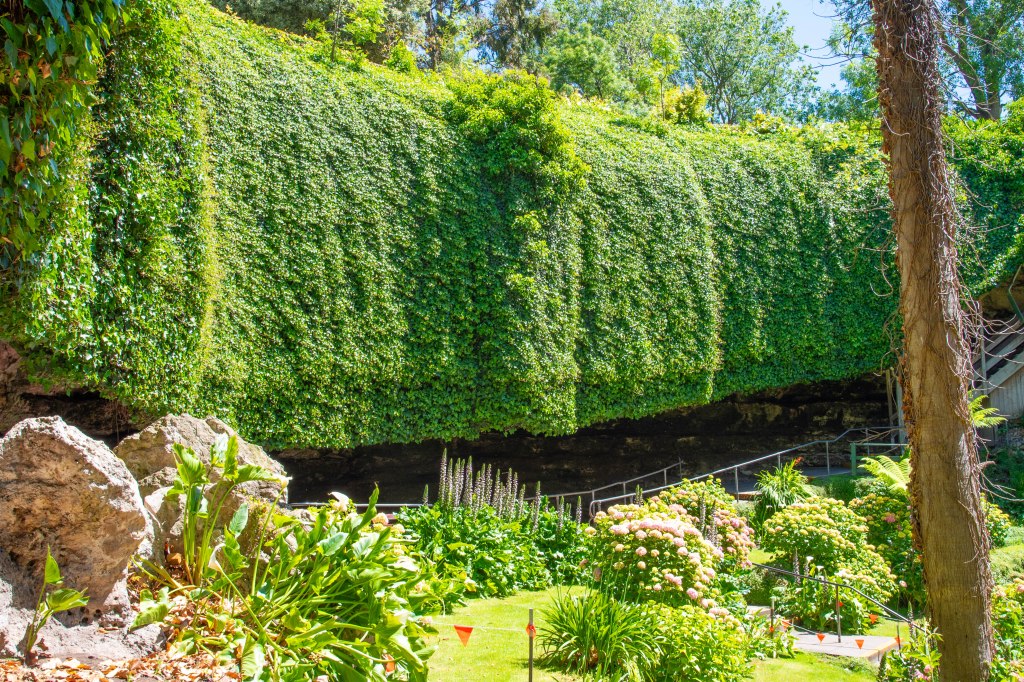
    Now apart from its geological history, there is a social history as well which started when James Umpherson bought the land that the sinkhole is now on.  At the time a third of the bottom was filled with water, so he had the grand idea of developing it into a garden for the enjoyment of his extended family, so he built terraces and planted flowers and even put a rowboat down there.   After he died, the property went through several hands before being acquired by the sawmill.  The gardens were left to become overgrown and Umpherson’s Victorian house was demolished in 1964. Then, in the 1970s, someone had the idea to restore the gardens, and a group made up of the sawmill’s social club got to it, volunteering their labour.  The sometime in the 1990s, the Mount Gambier Council took it over and now the sinkhole, its terraced gardens of hydrangeas and fuchsia, palm trees and ivy – in Victorian style – are public gardens for all to enjoy for free.  The gardens are also literally a hive for bees, who have made their homes in the nooks and crannies of the sinkhole wall, and apparently in the evening you can hand feed to possums, who also make the gardens their home.  It really is hard to describe, but it’s breathtaking,
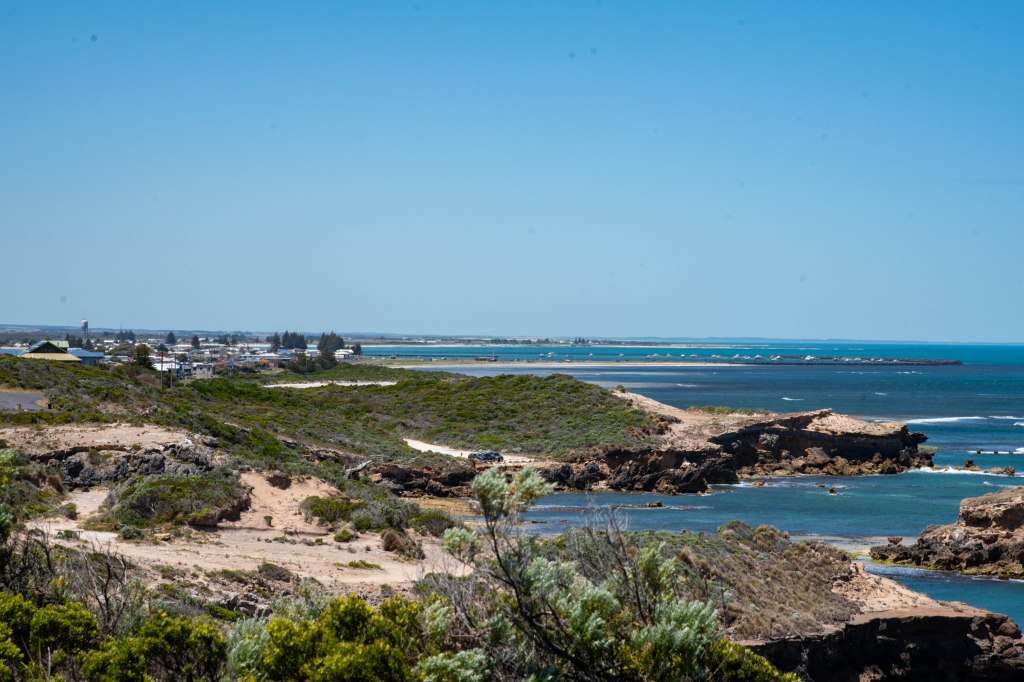
    There are other caves and sinkholes around, but again we were limited for time in Mount Gambier, so we decided to take a drive out to Port Mac Donnell (according to the green road sign), Port MacDonnell (according to the Regional Visitor’s Guide) or Port Macdonnell (according to our map).  It’s only about a twenty-five-minute drive from Mount Gambier.  On the way you pass Mount Schank, another volcanic crater, and the Allenton sink hole which is literally in the middle of the highway (and only accessible to lunatic cave divers by special permit – no thanks!)

    Port MacDonnell is the most southerly point in the state of South Australia and what I would consider to be the start of the shipwreck coast. 

    While the harbour itself is calm (just as well, as it is home to the largest lobster fishing fleet in South Australia), and there is a long stretch of beach, as you drive out toward the lighthouse, the limestone outcrops are rugged and harsh and the sea angrily throws waves up against them.  And the wind!  I really felt like I was going to be blown into the ocean!
    We stopped in for a toasted sanga for a late lunch and then drove back to Mount Gambier.  We made one more stop over at yet another sinkhole, Little Blue Lake – a popular swimming hole with locals, with a water temperature which is constantly about twelve degrees all year round. I’m not sure why it’s called Little Blue Lake.  Maybe it’s because the water is a little bit blue – like on a cloudless day and if you squint.  Or maybe it’s because if you swim in it you come out a little bit blue with teeth chattering from the constant 12 degree water.

    And just like that, our day and a half in Mount Gambier was done.  And I didn’t even get a chance to go to the coffee shop run by Supercars rookie Kai Allen’s family, because it closes at 1:00 pm.  Mind you, we did drive past it, and it looked a little bit too fancy for me anyway.  Maybe next time, when I remember to pack something other than thongs or ugg boots.
  • Days 16-22 – Adelaide!

    It’s a big one – there will be typos.

    We have just finished our week in Adelaide.  It was the first time here for both of us, and one thing I have learnt is that a week is not enough time in Adelaide, especially when two of them are dedicated to the Supercars final (more about that later).

    We didn’t even have time to visit Elizabeth to see how bad of a shit hole it is. Now, to be fair to this satellite suburb of Adelaide, named for our late Queen, I only hold this image of Elizabeth because I read Jimmy Barnes’ autobiography, Working Class Boy, and he did not paint a pretty picture of it.  I recall him saying in the book that he was lucky to survive his teens for fear of being killed by rivals hanging around the shopping centre.  And I’m sure that the town has changed since it first ‘welcomed’ all the ten-pound-poms in the 1960’s, but on the third day we were in Adelaide the Elizabeth shopping centre was locked down when two teenagers were stabbed in broad daylight…so there you go.

    Anyway, we arrived on Monday and checked onto our caravan park, the Discovery at Semaphore Beach.  It is a tidy little park, close to everything you would need, with gate access directly to the beach.  We promptly set up the awning, complete with our whizz-bang ant-flap kit  and set off to explore Semaphore.  What I found incongruous for a beachside suburb was that all the houses directly opposite the beach are these amazing 19th century, sandstone mansions, complete with fireplaces, and I love that this history has been preserved.  The beach heritage of the Sunshine Coast is ore about fibro beach shacks, and scarcely any of them remain.  Whenever I drive long the Maroochy River I feel sad that not one of these has been heritage-listed.  I know, there’s the asbestos issue, but… you know…history.

    The beach front is also dominated by some larger buildings like the lighthouse, now in a park, which you can go into for $29.  Sorry, we have been spoilt by Hay, so we just looked at it from the outside, and then promptly forgot to go back and take a picture of it.  There is also the very grand Largs Hotel, and the Pavilion.  The latter was opened in 1922 and is the only “building” on the beach side of the road.  Originally it housed a swimming pavilion that could cater for 500 swimmers, and a ballroom (which I think is still there as a less grand function room) but now boasts a café, bar and bistro looking straight out to Antarctica.

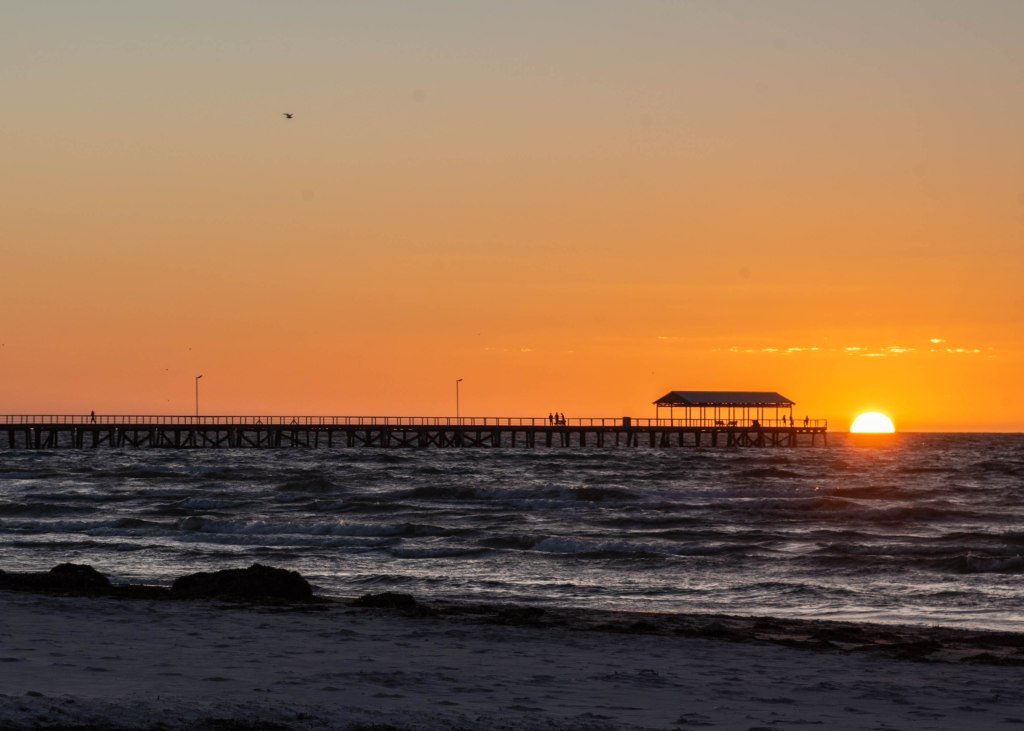
    Once we got our bearings about where the sun was going to set, we went back down to the beach in the evening to attempt photos of the sun setting over the Semaphore Jetty.  Now of course, early evening means about 7:45 pm, with the sun not actually going down until an hour later, because Adelaide engages in daylight saving, which totally threw my body clock out because I could never figure out when to eat my evening meal, because the sun wasn’t going down early enough. And yes, I am one of those Queenslanders who will always vote no to any poll about it, because unless you have been living in far western Queensland with summer days that reach into the mid-forties and where the sun already sets later than in the south-east corner, I don’t think you should even be entitled to a say.

    Anyway, I digress.

    While we were down at the beach the wind started to pick up, and by about 10:00 pm the anti-flap kit was struggling, so we pulled the awning down rather than risk damage, and that was the last time we used the awning for the rest of the week, because the wind did not let up.  We met a lady who had been staying there for a month, and she said the wind had been relentless the whole time, so although the park was quite lovely, if we ever go back to Adelaide, we won’t be staying there again.

    On our second day we drove into the city. Again we were greeted by magnificently preserved sandstone buildings dating back a century-and-a-half, including the beautiful University of South Australia, some commercial buildings, a lot of pubs, and of course, since it is known as the city of them – the churches.  According to Google, there are 529 churches in Adelaide, and I reckon during the course of our week we drove past all 863 of them. They are everywhere, and for the most part they are beautiful.  What is incredibly impressive about all of these heritage buildings is remembering that South Australia did not have convicts, therefore no free labour. I think South Australians are very proud of their city, and they have every right to be.  Not only are there the buildings, but the entire city centre is surrounded (literally – take a look at a satellite pic) by parkland, which not only contains the spread of the CBD, but also led to the development of satellite town/suburbs, beyond the gardens, and each of those has an identity of its own.  Yes, there are more than a million people in greater Adelaide, so there are still issues like busy, congested roads, but for the most part, I say, “Well done, Adelaide!”

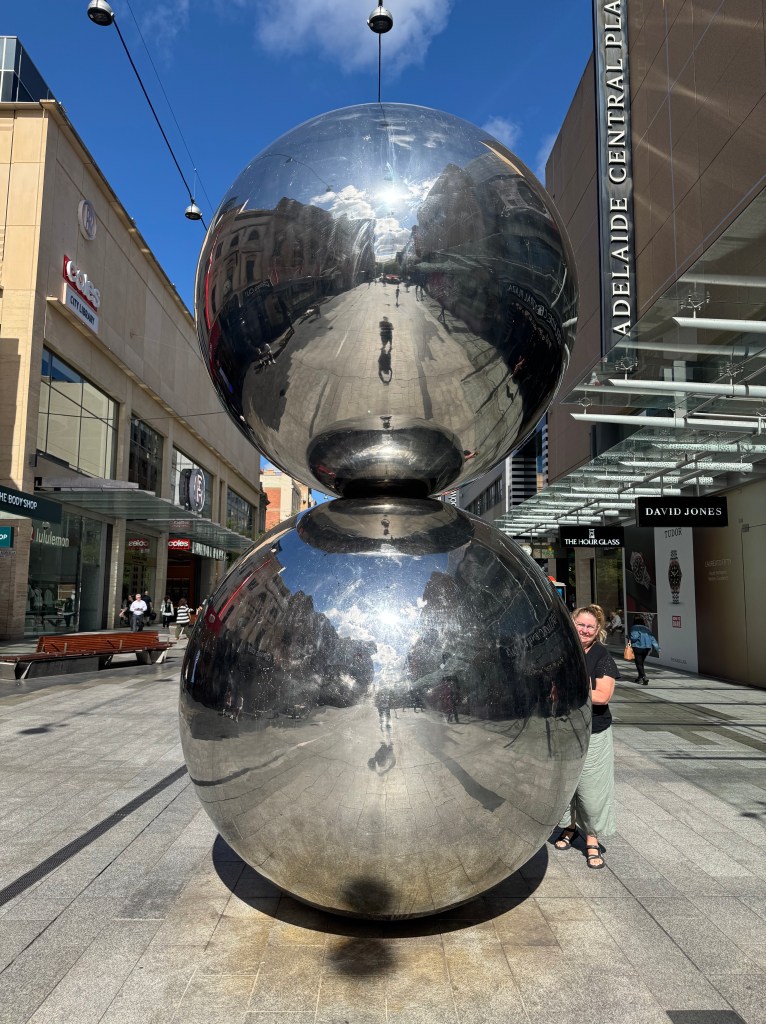
    No visit to the CBD would be complete without a visit to Rundle Mall and a quick snap in front of its iconic balls – so tick – but after a quick coffee catch-up with our mate, Pete, who is halfway through a work contract down here, we had to head back to Semaphore as we had booked lunch at the Palais – because there was something alluring about having lunch and looking out over the Great Southern Ocean.  Unfortunately, while the lunch was delicious, the Palais was undergoing renovations, so we couldn’t sit out on the deck, and the bistro is in what was once the downstairs bathing pavilion, so even though we could see the ocean, it did feel a little sub-terranean.

    On Wednesday, we headed off to the German town in the Adelaide Hills – Hahndorf.  For Sunshine Coasters, I guess Hahndorf is like Montville or Flaxton – on steroids.  Like, Montville has a cuckoo clock shop.  Hahndorf has a cuckoo clock shop where you think they might actually sell the odd cuckoo clock.  Because we were there mid-week, it was a little bit quieter than it apparently gets on the weekends.  It would have been even quieter if not for the couple of busloads of school kids who were there on a German excursion.  Yeah, right.  They were likely to use about as much German in Hahndorf as your average middle-aged English tourist does on a trip to Ibiza.  I mean, we ordered apple strudel from the German Inn, and both the guy behind the bar and the waitress were Sri Lankan.  But hey…the kids had a worksheet in their hands, and a very minimal teacher presence, so I guess they were having a blast.

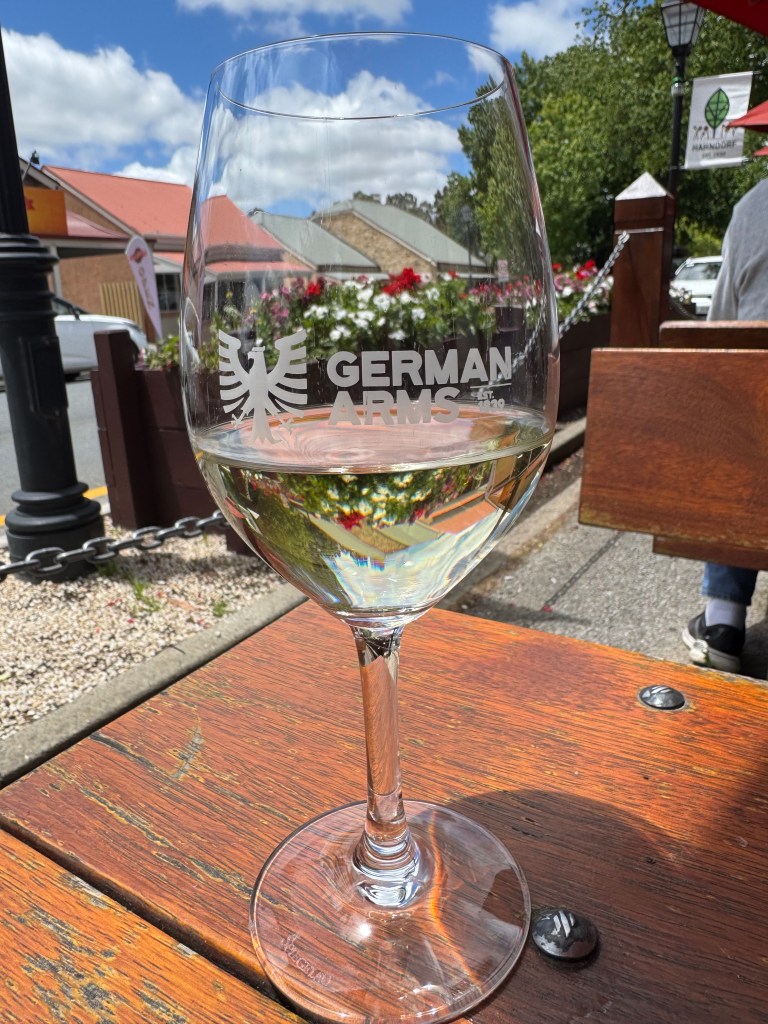
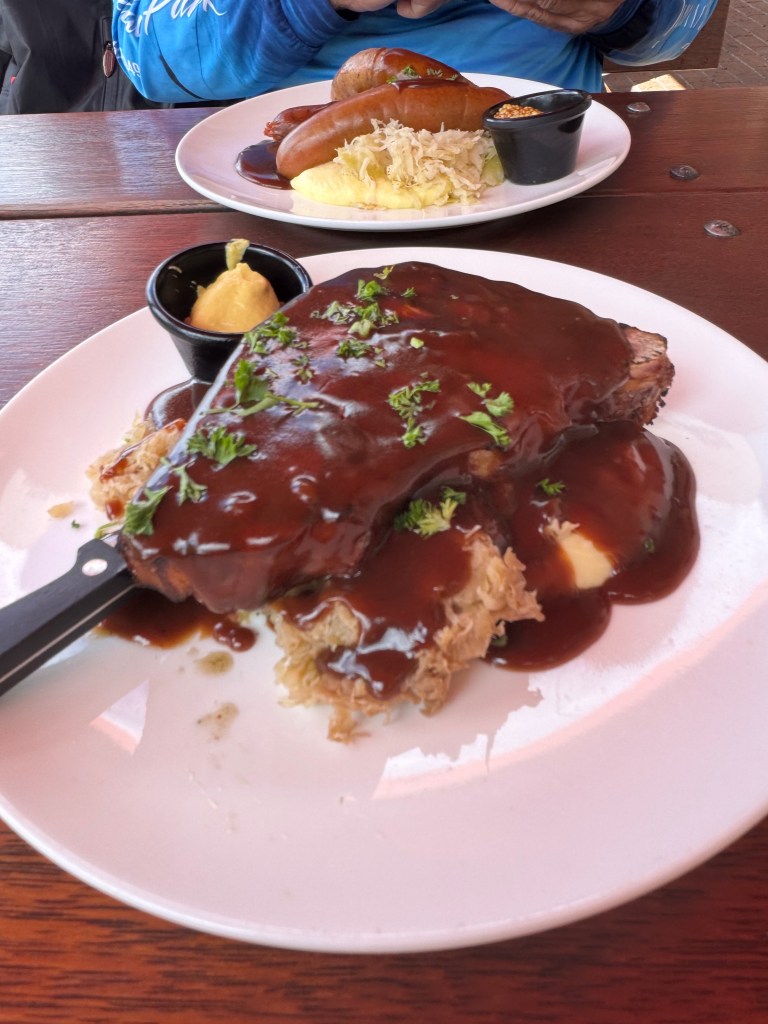
    We had lunch at the German Arms – Mark tried the German sausage combo.  I had a smoked pork chop, and also impressed Mark by drawing on some old high-school maths to figure out that it was much better economy to by two small wines rather than one big one (more mls, less money), and even better economy than buying a bottle!

    After lunch we made our way back down the hill.  The freeway here has not one, but two, ‘ramps’ leading off the road in case trucks go out of control – lose the breaks and can’t stop.  Of course, this just makes me wonder how many rogue trucks necessitated to construction of these, how many times they have been used since construction, and which of the trucks surrounding us were likely to need them that day (or worse – I have seen Stephen Spielberg’s early classic, Duel starring Dennis Weaver, a truck and a pair of hands). I also notice that the motor way also had a detection system for over-height vehicles.  One wonders why the Queensland government hasn’t managed to install something like that at that notorious bridge in Rocklea.  Having said that, we were on our way to the Port Adelaide shopping centre and passed a truck being attended to by a tow truck.  The truck’s roof was peeled and collapsed, and there were tell-tale scars on the nearby railway bridge and associated rubble on the road.  I guess you just can’t always account for people’s stupidity.

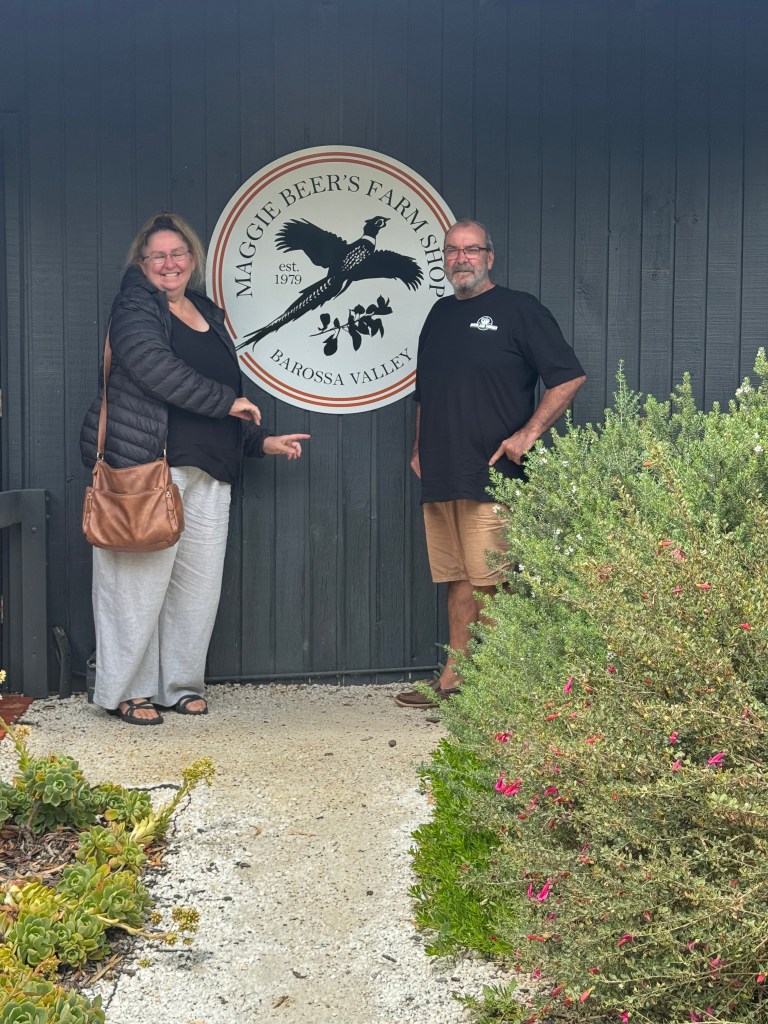
    On Thursday, we back-tracked to Nuriootpa which we had planned to visit the Sunday before, but I had been tardy in booking our accommodation there and did the wine tour out of Gawler instead. We picked up our friend, Velvet, and headed off to Maggie Beer’s Farm Shop and Eatery.  I love Maggie – she is such an icon and always seems so warm and lovely, that I knew I couldn’t go to the Barossa and not go there.  Of course, I knew she wouldn’t be there herself, but it’s like a culinary pilgrimage in this country. 

    This was one of the signature things that we had planned for this trip, and we indulged on the five course feast lunch accompanied by a bottle of Barossa rose for Velvet and I and some fancy-schmancy juices for Mark. Every morsel of that meal was DIVINE, from the bread to the chutney and crisps to finish. Even the goat’s cheese in the mushroom pasta was delectable, even though this is the top of my overrated food lists (or things that people say they like just to be pretentious twats)  I now want to try to perfect my own grapefruit semi-freddo, knowing that whatever I manage will never be a patch on our Maggie’s!  Even better, because this meal was smaller portions, spaced out, I managed to eat five courses and simply feel happily sated, and not just one course from a German pub that made we want to nap for the rest of the arvo.

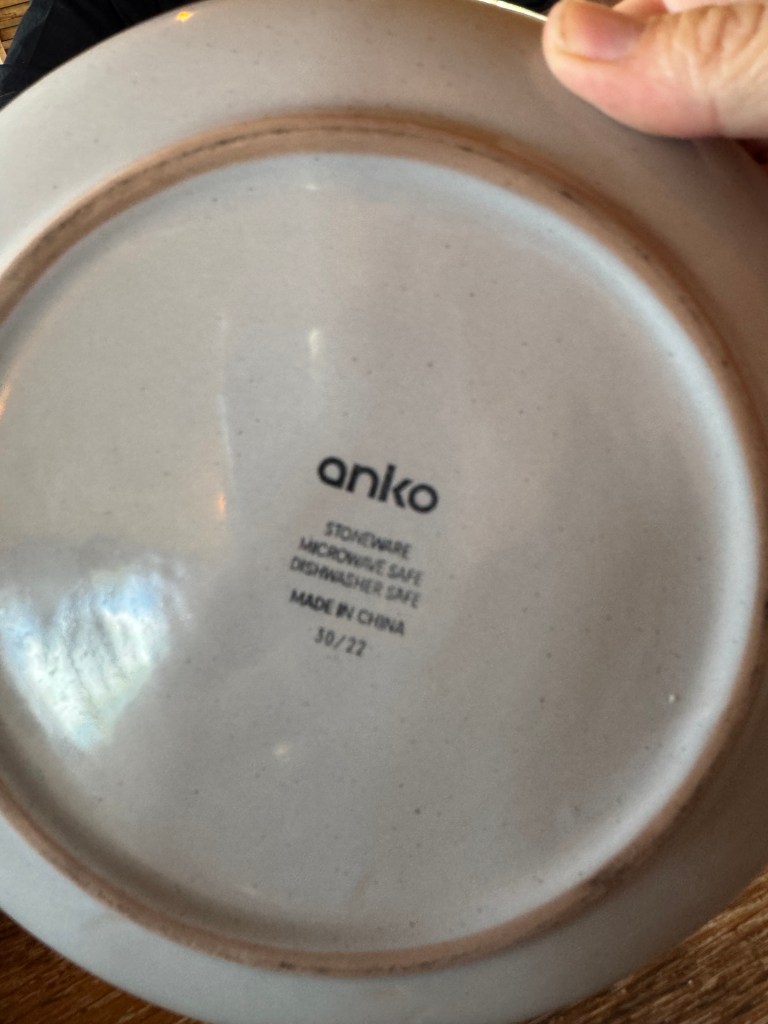
    There was just one unexpected thing about the whole eatery experience:

    I guess we’re only supposed to concentration on what’s on top of the plate!

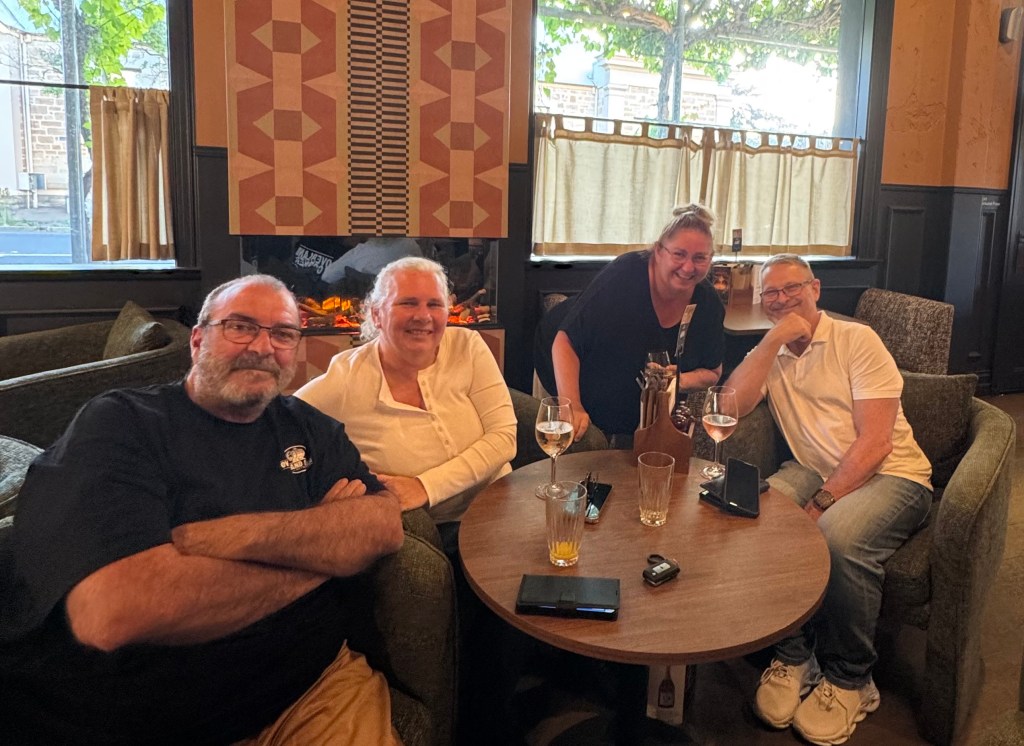
    Upon our return from Nuri (as the locals call it – apparently because they struggle to pronounce it too), we met up with Pete at ONE of his local pubs, the Sussex at Walkerville.  We got a bit lost, courtesy of our dodgy GPS, but at least now Velvet knows where to find the headquarters of transport company Linfox, and she returned the favour by pointing out the block of flats where a guy had been murdered earlier in the year. Did I mention that Adelaide has more churches per capita than any other capital city, but also the most serial killers?  Actually, all over the Adelaide news this week was the story about the only bloke convicted in connection with the so-called “Family” murders in the 1980s.  He’s on his deathbed and the police are hoping that he will give up all his secrets before he falls off his mortal coil.

    Anyway, back to the Sussex, a recently renovated old pub, which was super busy for a Thursday with couples in the lounge bar, and families having dinner in the beer garden (which has a section with a fire pit).  But the thing that most impressed me is that on Mondays, the Sussex does a fondue special!  The most disappointing thing – it was Thursday.

    Then  it was back to Pete and Velvet’s Adelaide digs for a a night cap, before making the drive back to Semaphore Beach. An awesome day.

    Friday greeted us with cold weather and rain.  Our plan had been to go to the Adelaide Oval to watch the WBBL game between the Brisbane Heat and the Sydney Sixes as one of Connor’s teammates from their junior soccer days is contracted to the Heat. But Micky had messaged us on the Thursday night that at that stage she would be carrying the drinks, so when the rain greeted us in the morning, we decided to pull the pin.   As it turned out the game was abandoned without a ball being bowled. 

    And then sometimes, when you have been on the road for almost three weeks, a cold rainy day is not a bad thing. We caught up on our washing – I discovered that our little caravan washing machine can cope with a queen bed sheet, two pillow cases and a couple of T shirts in one hit, so I did a couple of loads and then just chucked it all in the caravan park’s Maybig, and we watched Brodie Kostecki win $50 000 in the sprint race of the Supercars.  We gave the van a good sweep and a general tidy, and just generally recharged the batteries.

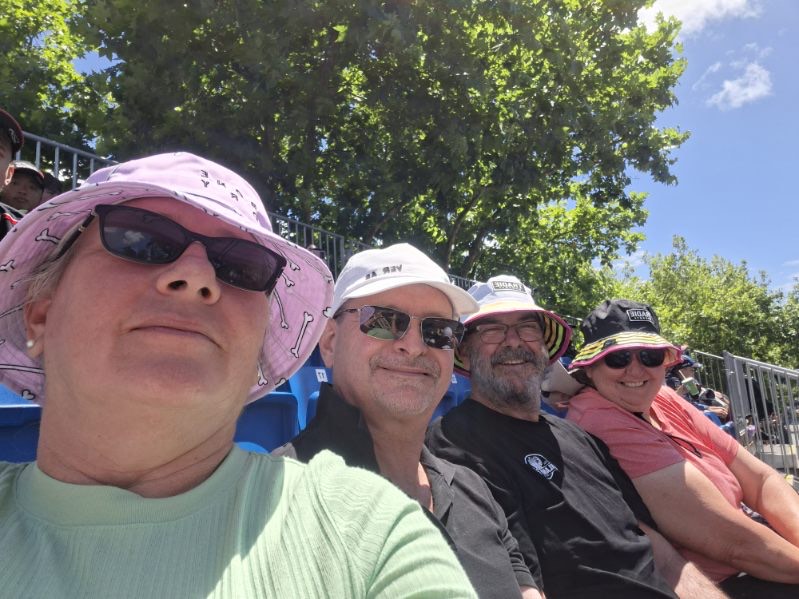
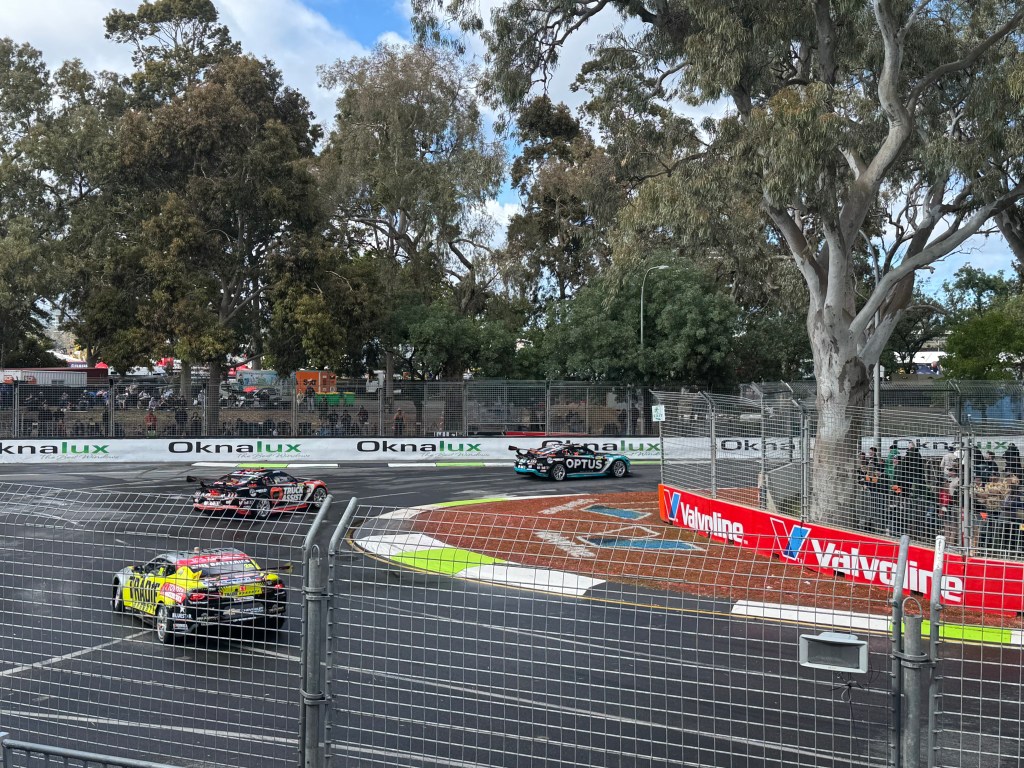
    Saturday loomed large because it was Supercars day!  There had already been two days of action down at the track, but our intention had only ever been to go for the final two days. Getting from way out at Semaphore Beach to the track was super easy.  We parked the car at the Glanville train station, about five-minute drive from the caravan park.  Then we hopped on a train to Adelaide Station, then walked straight out the door onto a free shuttle bus, walked 50 metres to the gate, probably another 50 to our seats in the Brabham Stand and we were set for the day – in under an hour. Pete and Velvet joined us, and although their seats were technically a few rows back, they decided to sit with us until the real owners of those seats turned up, but they never did (neither day).

    On Sunday, it was the same thing, but the Sunday at the Supercars was a little bit special.  Firstly, three drivers – Nick Percat, Will Davison and Snowy River Caravan sponsored James Courtney (who we still ‘blame’ for our van) – were retiring after long careers, not only here, but overseas. Secondly, this year there was change to the way that the Driver’s Championship was decided,  I don’t want to bore any non-Supercar fans who have managed to stay with this blog this long, but there were only four drivers in the field of 25 who could win the title, and realistically, it came back to only two.  Now while some people follow a brand, I follow drivers. While my favourite driver was out of contention, two of my other favourites were battling it out.  I wanted Chaz Mostert to win because he had never one after 12 seasons, and I wanted Broc Feeney to win, because at 21 years of age, he is a driving talent and a lovely young man – and had won more races and pole positions than anyone else in the 2025 season.

     On the first lap, Chaz’s driving partner Ryan Wood got tangled up with Broc Feeney, spinning Broc around and pushing him to the back of the field. This caused great controversy as many of Broc’s fans believed that Ryan had done this deliberately to help Chaz.  I thought it was just a racing incident. Broc started to charge back through the field, but then his engine started failing, and he ended up losing all the gain he had made, even being lapped by most of the field.  Chaz finished second in the race behind Matt Payne, but this was enough for him to win the Championship.  I have never been so elated, and so deflated at the same time, and I think a lot of people felt the same way.

    After the race we bid our farewells to Peter and Velvet, having had a great time with our friends of almost forty years. We returned to Semaphore Beach, sad that we were leaving Adelaide, but also sad in realising this was the turning point, because although we still have three weeks on the road, now we are heading home, and although we have missed everyone there, we have really loved our little taste of life on the road.

    Also, we have to go back to Adelaide, because although seeing 1892 churches, we didn’t take a photo of a single one.

  • Days 10-11 – Mildura

    Today we did a bit of border hopping into Mildura, Victoria. Mildura was a surprise to me.  It is much larger than I expected – a full regional city really – so big that even Lenny Kravitz is doing a concert there.  Banners advertising this concert adorn every bridge and half the streets.  A bit of overkill, one would have thought, because you would think that everyone in Mildura would already know, and if you happen to be the world’s most tragic Lenny Kravitz fan, who just happened to be passing through Mildura to find that you idol was on his way, it is probably too late to get tickets anyway. But while most of the other towns we passed through are starting to tart themselves up for the festive season, this town is proving that Lenny Kravitz is bigger than Christmas.

    And yet, for all of it being a major regional centre, every spare bit of land seems to be covered in vineyards.  It kind of reminded me of when I went to Japan and was trying to work out what sort of town planning allowed tyre shop, cemetery, restaurant and rice paddy to be placed next to each other. All these vineyards, but not a cellar door to be seen.  Then we passed by this huge shed with “Marciano Table Grapes” written on the side, and then I was reminded that some people like to imbibe their grapes as solids.

    We stayed a little out of town in the suburb of Red Cliffs, at the Big 4 where upon arrival I was presented with a coffee voucher and a bag of sultanas.  The Red Cliffs caravan park is beautiful – the best lawns I have seen in any park we have stayed in anywhere, although the groundsman told us that the boss was into him because they were looking shit.  “The worst in four months.”  The park backed on to a vineyard of course, making for a very picturesque two-night stay.

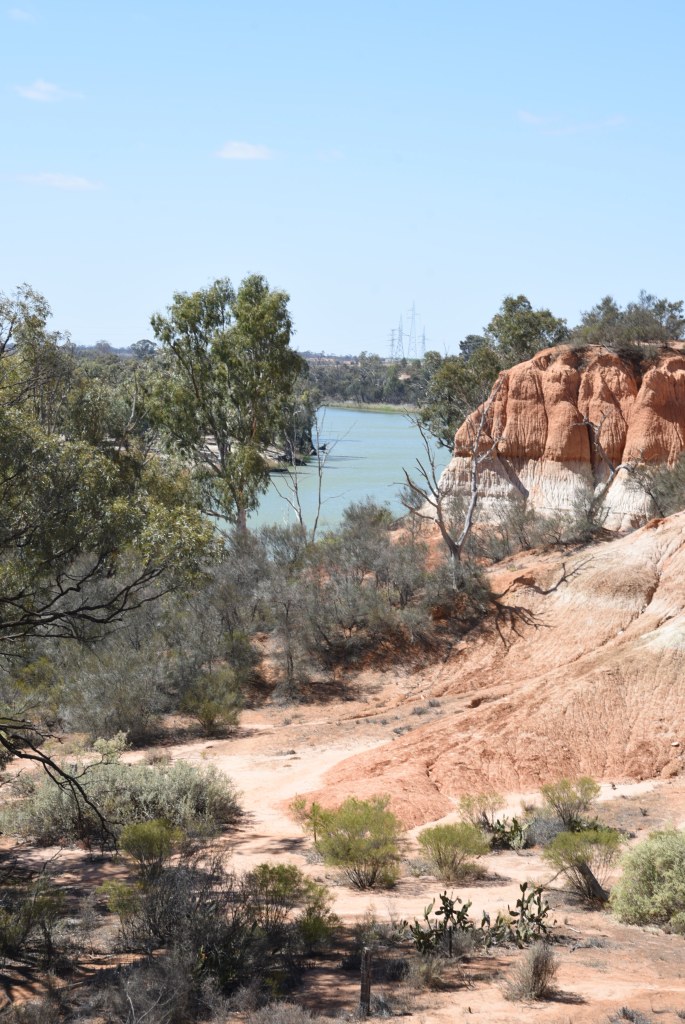
    Allof these little jaunts have been stopovers to the big dance – Adelaide, so we only had a day to check out Mildura. Everything on Mildura is about the river Murray, the provider of the water for all the people in this city, and its vineyards, and the citrus, and all the other agriculture in the area. A stone’s throw from where we were staying is the Red Cliffs lookout, where you get a superb panorama of the, you guessed it, red cliffs of the Murray River bank – at least on the Victoria side. Mark put the drone up to truly capture the view,  

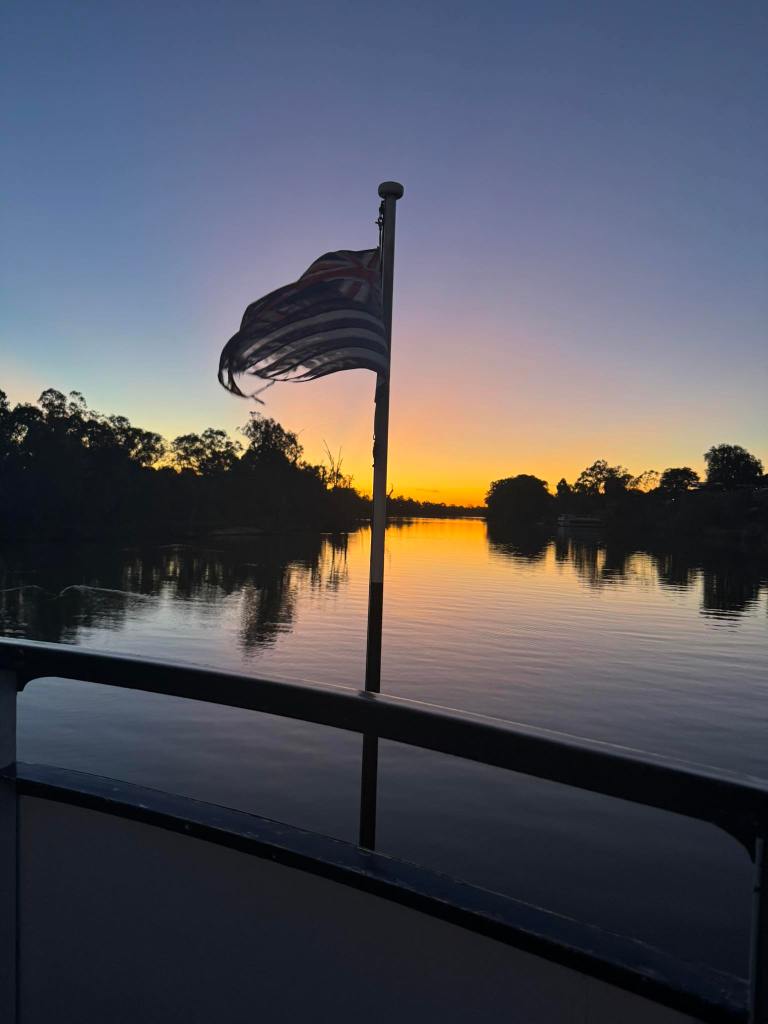
    The in the evening, we took the paddlesteamer “Rothsbury” for  a dinner cruise up the river.  I reckon it was pretty good value for $85 per head, because apart from the spectacular scenery, you are treated to a genuine 1970’s carvery roast with chicken and lam, carrots and beans, cauliflower au gratin, lashings of gravy, and mint jelly from a jar,  and dessert, with the choice of pav, cheesecake or lemon tart with ice-cream scooped straight out of the tub.  No pretention here! Even the drink prices were reasonable: glasses of wine were on the lower end of the price spectrum, and soft drinks matched Bunnings (my new measure for drink pricing). 

    I have to admit to being totally discombobulated on this trip.  Victoria is on one side of the turns so its hard to keep track of what’s what. Anyway, on the NSW side, mansions take up almost every vantage point, whereas on the Victorian side it seems to be much more people orientated with rowing clubs and ski clubs and hundreds of metres of free camp, which I wouldn’t have even thought to look for, but oh well.  I guess that means there needs to be a next time.

    The coffee voucher I was given at reception was for a café down the road called The Shed.  Even though I had been stung by the servo curry chai of the other day, I ordered one here and it was possibly the nicest chai latte I have ever had in my life and Mark raved about his coffee also.  We had brekkie – Mark had salmon eggs benedict, and I had their speciality omelette full of ham, mushrooms, red onion and spinach .  It’s a good thing we only had a couple of days here, or I’m sure we would spend it in a permanent food coma.