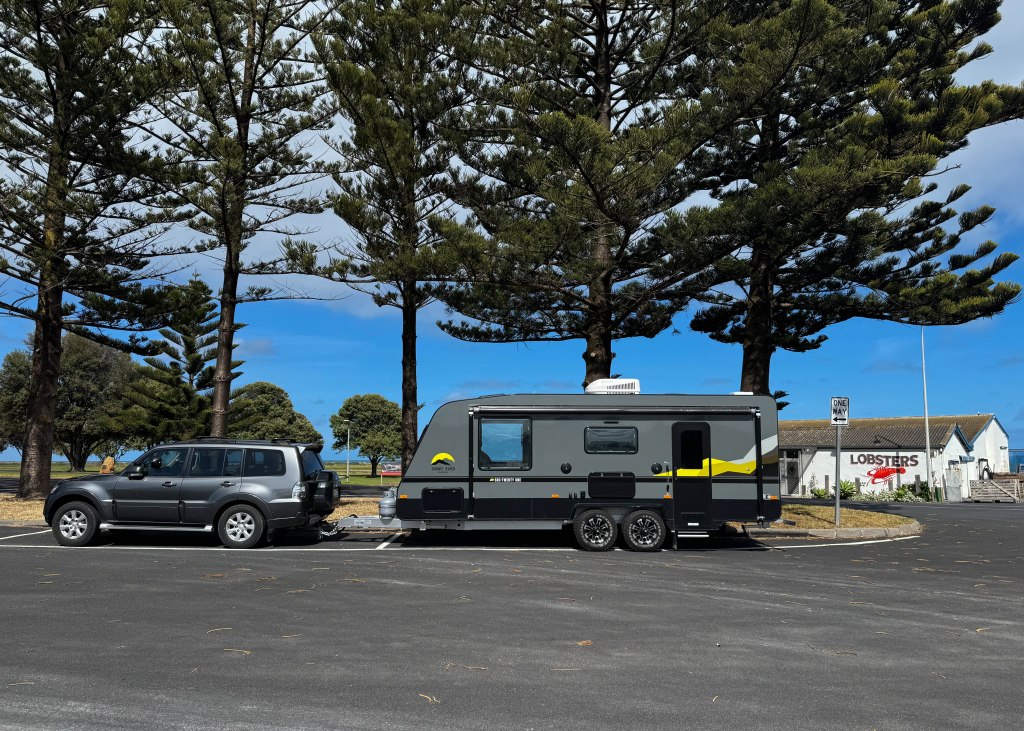
It was sad to be leaving Adelaide because, although we still have three weeks of our trip, this marked the turning point in terms of us making our way home.
Today we made our way back through the Adelaide Hills, past Hahndorf and Murray Bridge, making a quick stop at Tailem Bend for petrol, and to wonder at the pelicans fighting against the wind to land in the Murray. They reminded me of the Flying Nun, and if you know what I am talking about, then you have dated yourself as much as I have. Mark took some photos, but the wind was blowing so hard I could hardly keep the camera still, and it was cold! Truly, we had been so lucky with the weather to this point, but the wind today was awful. Windy, cold, cloudy and showery. It meant that Mark really had to concentrate with the drive, with gusts making the van sway at times (the first real sway we have experienced). The drive took us through the Coorong National Park, with its lagoons separated from the ocean by a this stretch of hilly sand, but the weather didn’t give us the opportunity to enjoy the scenery as much. Even the couple of pink salt lakes were dull, but Mark was patient enough to wait for the sun to peep out from a cloud momentarily so that he could try to capture the colour.
Mid-afternoon (or actually early afternoon real time) we pulled into Kingston SE, SA. The SE part has to be used as a qualifier, because some bozzo in the naming department chose a name that was in use already elsewhere in the state. I didn’t know a whole lot about Kingston SE – I chose it because it was on the Limestone Coast, and because it filled our criteria of three to four hours drive on travelling days. It was also recommended as a place to taste South Australian lobster, something which Mark had on his ‘To Do” list. In fact, Kingston SE prides itself on its lobsters so much that the entry to the town is dominated by a 15-metre tall one called Larry. He was built circa 1979 to try to attract tourists and promote local food and wines.
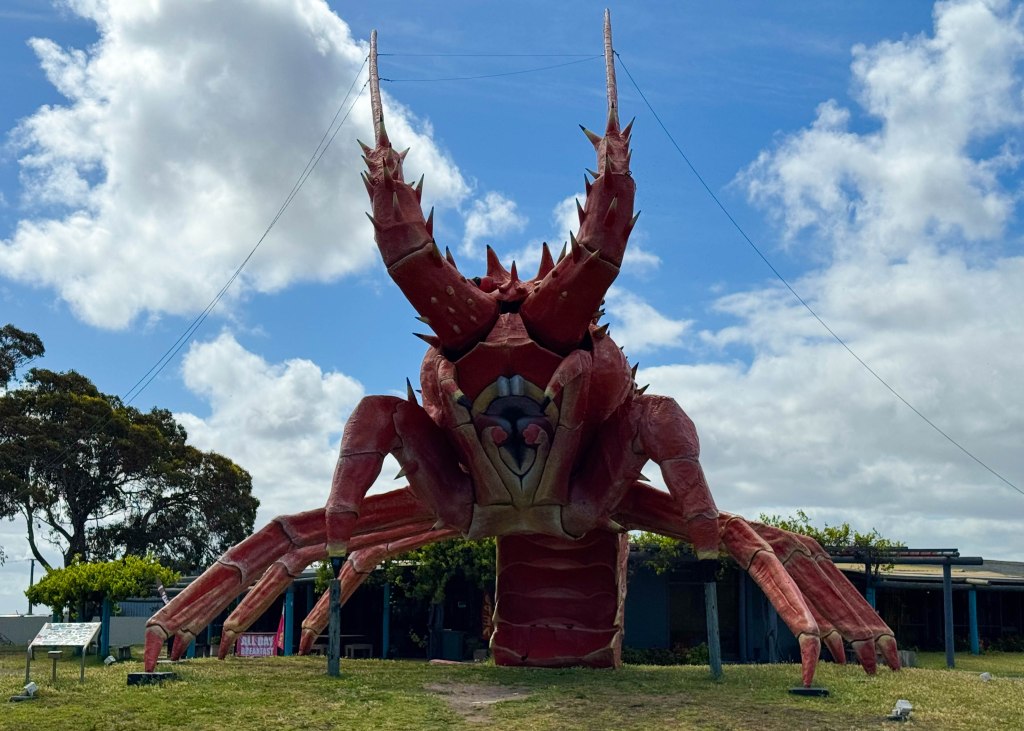
I can not attest to how successful this has been over the years, but I can say that at the time of our visit, late November, Kingston SE was QUIET. The town was quiet, the caravan park had heaps of room, and the beautiful Marine Parade, with car parking spaces running its entire length, did not have a single car parked along it. (Of course, the wind may have been a factor!)
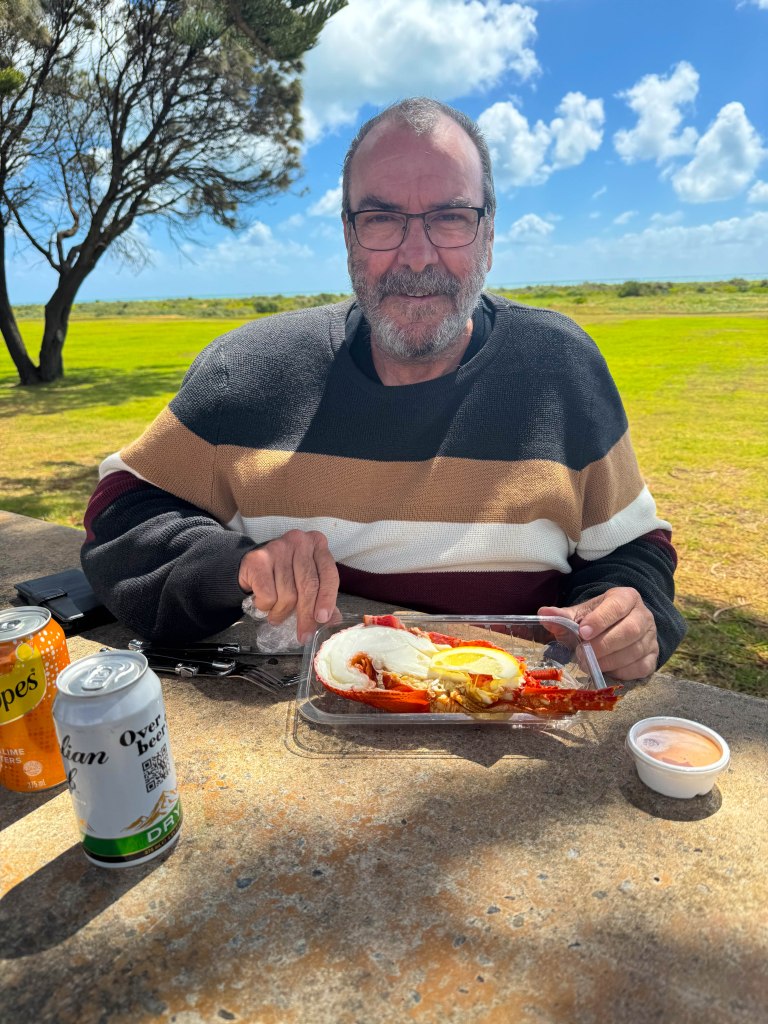
The lady at the caravan park told me that the place to get rock lobster was Lacepede Seafoods. With us arriving at 2:00 pm and them closing at 3:00 pm, we high-tailed it down the road (actually, it was only about 150 metres away, but I am trying to create a sense of urgency). Now we were expecting lobster to be expensive, but even so I think we were both taken aback when we looked in the cabinet and the two fattest lobsters in there were $225 each! Luckily, ahead of us in the queue was a gentleman who was ordering lunch for his family. He wanted not one, but both of the big lobsters, and half of one of the small ones (“for the kids”). The lady behind the counter was reluctant to halve the small one because it was so close to the end of their day, but then we jumped in and said we would take the other half of the small one and everyone was happy. We parted with $50 to taste our crayfish, and the guy ahead of us spent $500 on lobsters – as well as some whiting and chips – for lunch.
We took our meagre portion and decided that we would at least eat it in the park across from our van – close to the ocean. Kevvie the cray fish was delicious – what there was of him – but wish list ticked, we high-tailed it back to the warmth of the van.
I had picked up a “Walking Guide to Kingston’s Heritage” brochure at reception at the caravan park, but given the wind and the cold, we decided to drive it instead. After all there were thirty-five things on the list! One of the things that we discovered was that there were originally two townships, one on either side of Maria Creek Eventually the two towns merged to become Kingston. Now the other town was called Roseville, and I can’t help but wonder why they didn’t opt for that name, thus avoiding that SE business. Maybe the rough and rugged lobster fishermen of the late 1800s couldn’t cope with the femininity of it.
Kingston has a heap of beautiful old buildings, as well as few vacant lots where historical buildings used to be – you had to use your imagination on those. One of the buildings still in existence (and actually for sale) is the RAOB Hall, once the meeting place for the Royal Antediluvian Order of Buffaloes, and all I could think of was those meetings that Fred Flintstone and Barney Rubble used to go to wearing those blue furry hats with horns on them. But apparently they would have looked a little more like this:

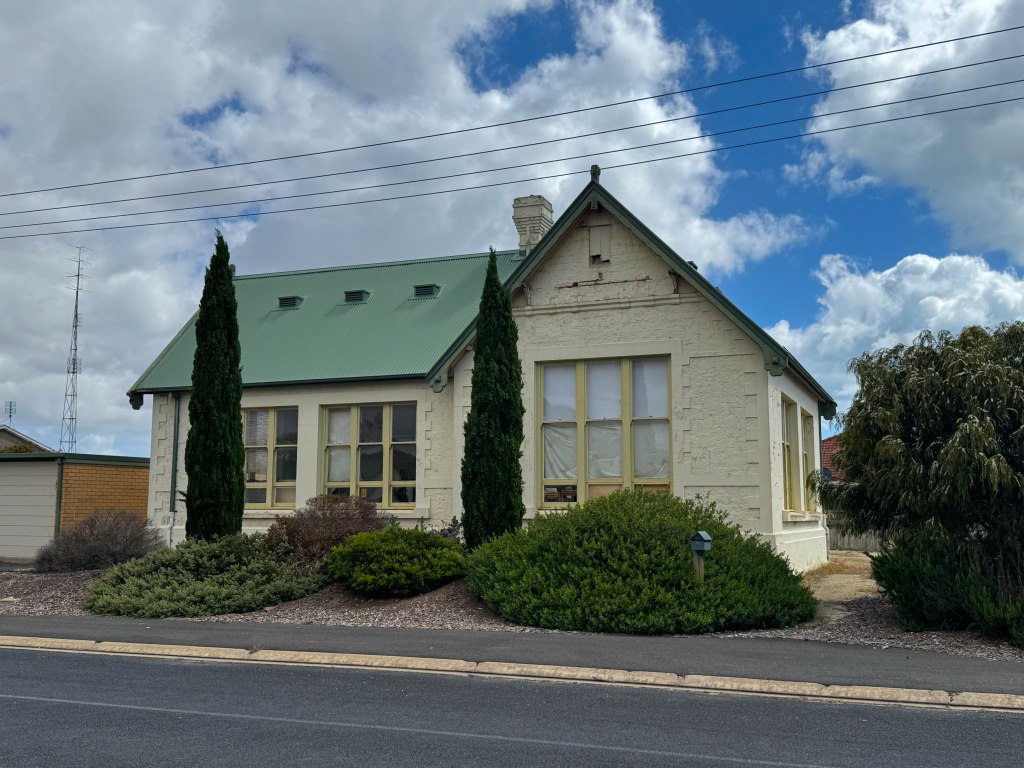
As the day we were in Kingston almost coincided with the teachers’ strike in Queensland, I couldn’t help but think about the advancements in teaching conditions thanks to unions. The Kingston School opened in 1880 with an enrolment of 130 students, housed in two rooms! You might think that at least they were big rooms. Not judging by this:
But perhaps my favourite little piece of heritage was the statue for Walter “Tiny” Toop. His claim to fame? He was one of seven servicemen chosen to ring the bells of Notre Dame Cathedral to mark the end of World War One. I am not sure what Tiny had to do to earn this privilege, But I am sure people have been given statues for less.
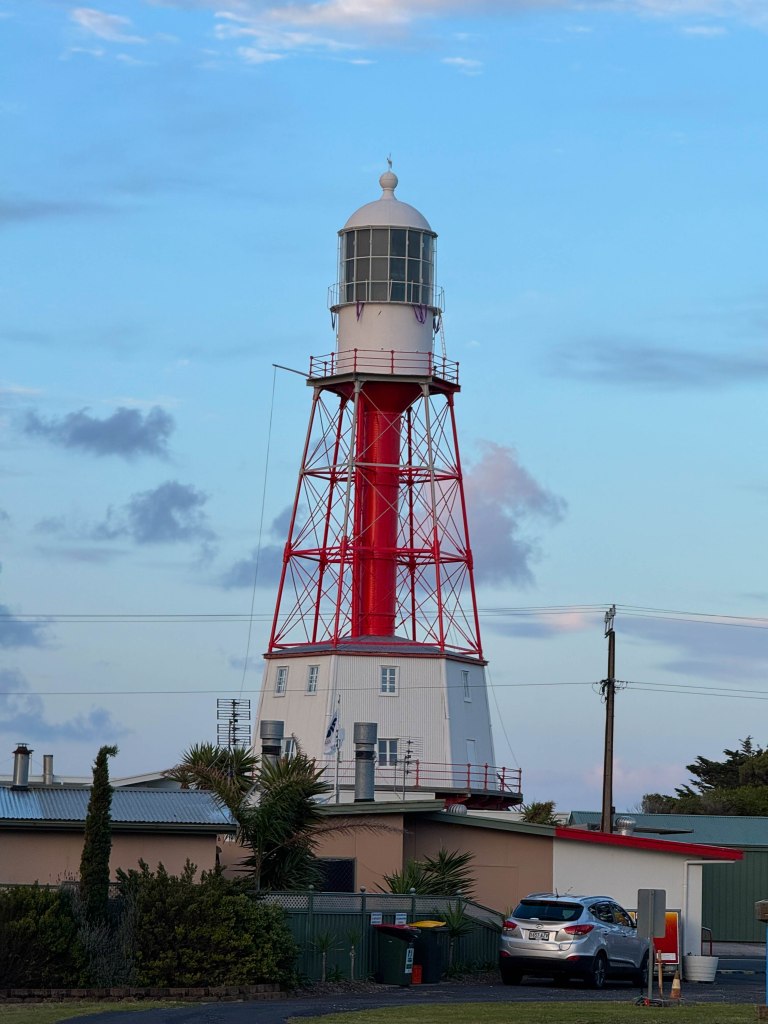
The other landmark of note is the Cape Jaffa Lighthouse, which stands tall (albeit on a bit of a slant) over the caravan park. Originally an offshore lighthouse, it was dismantled and re-assembled on shore and is now a museum – which was closed for renovations and that kind of added to the quietness of the town.
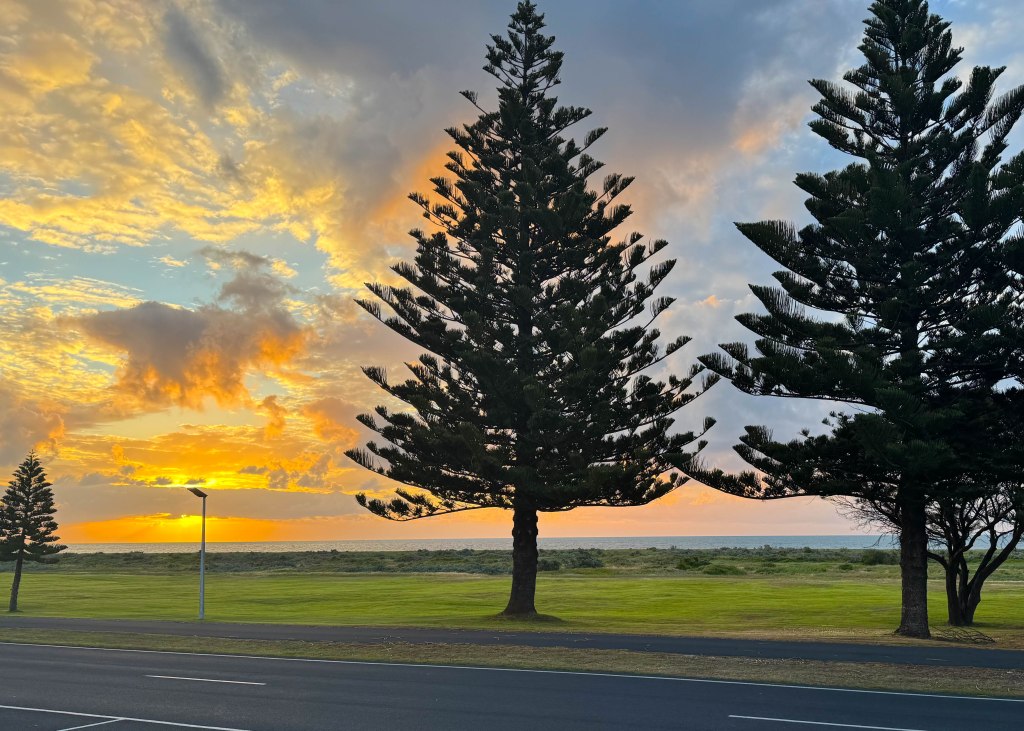
By sunset the wind had died down a bit and the rain had cleared to produce a lovely sunset.
For one of those towns where we really only had half a day because we were using it as a stopover, I think Kingston SE had a lot to offer.
Now one day I will have to get to the other Kingston to see how it measures up.
 The Tent, The Trailer, The Caravan