We left Kingston SE and headed for Mount Gambier, stopping off for a coffee in Robe. Robe is very pretty, much bigger than Kingston and far more touristy. According to the guy who was sitting next to me at the Supercars, you can get an excellent fish chowder in Robe. No time to seek that out since we were just passing through, and definitely not something I would seek out for breakfast.
We arrived in Mount Gambier and our GPS took us to the Pine Country Caravan Park and thanks to its convoluted directions, it felt like we must be out in the boondocks somewhere. Nonetheless, the park is a very pretty one with drive-through, lushly grassed sites. As soon as we set up, we set off to find Mount Gambier’s famous Blue Lake, and discovered it was about a kilometre away, just over the hill.
Now, I knew there was a Blue Lake at Mount Gambier, obviously. It’s the reason we decided to have a stop over here, and of course I have seen photos of it heaps of times. But I don’t think anything can prepare you for the first glimpse of it. It really takes your breath away and the blue is mesmerising. There is a road that goes right around the top, and I really don’t understand how there aren’t constantly accidents, because it is hard to keep your eyes on the road.
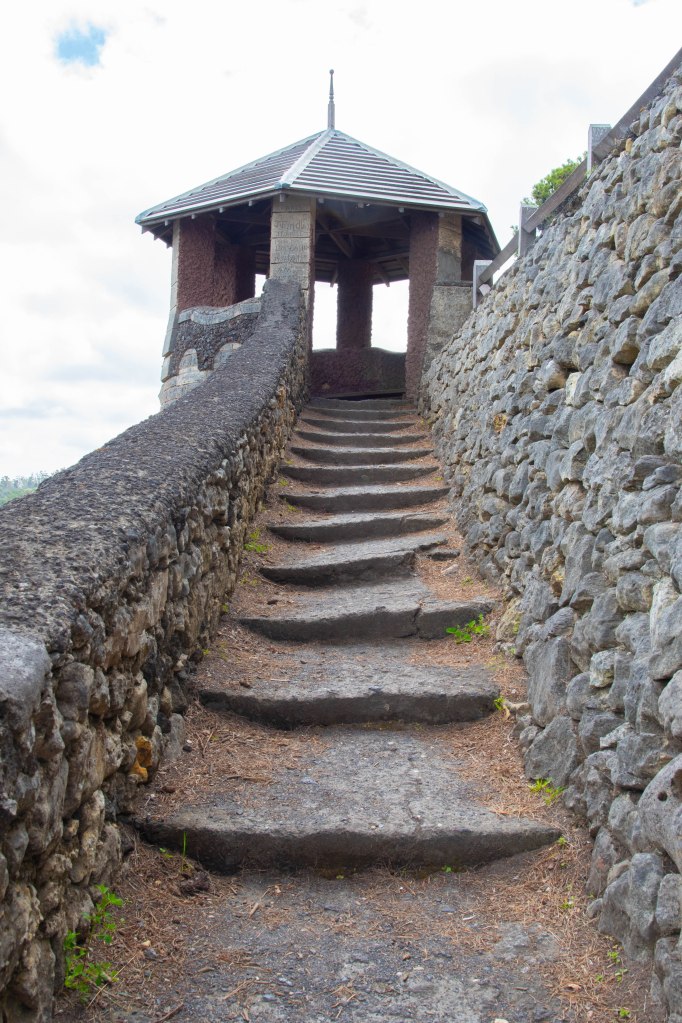
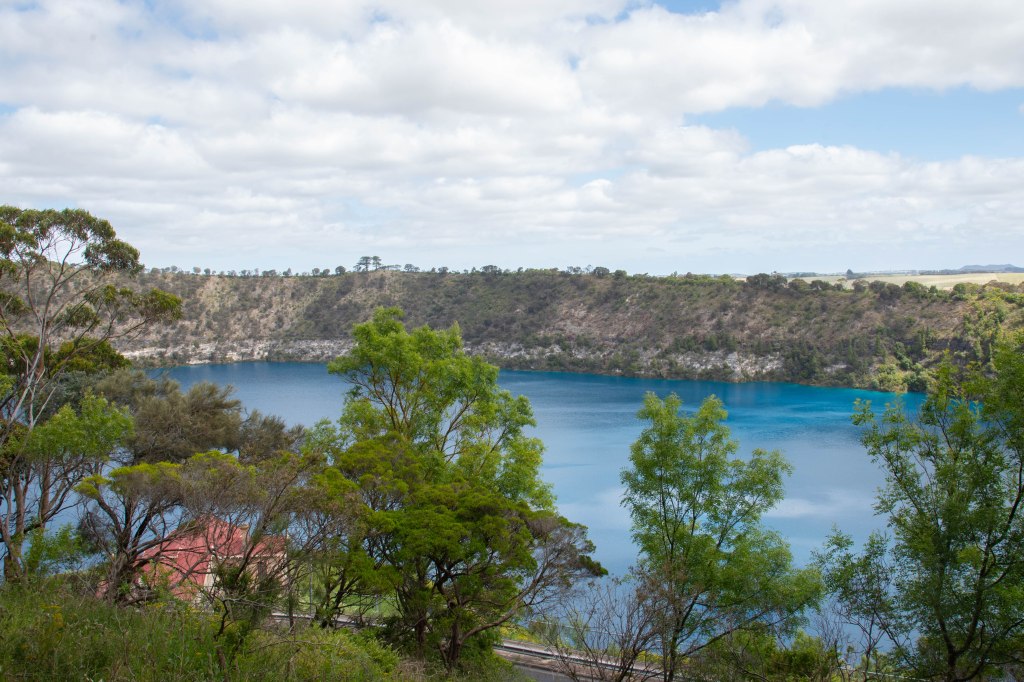
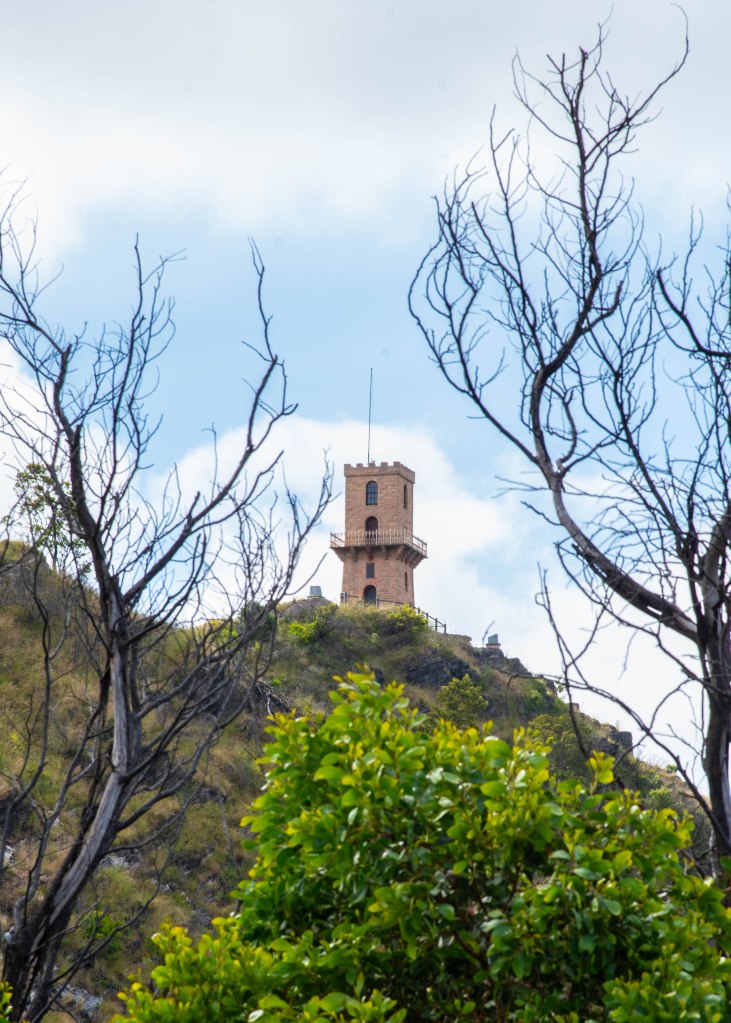
Thankfully, the city of Mount Gambier has made several places where you can stop and take it all in. One of these features a little turret made of stone which is at the end of walking path which follows a man-made rock wall. What is amazing about both these structures is that they were built by volunteers – seven hundred of them, including school children! These days you’d be flat out getting a dozen people to a working bee at their kids’ soccer club, but such is the pride of the townsfolk for this lake.
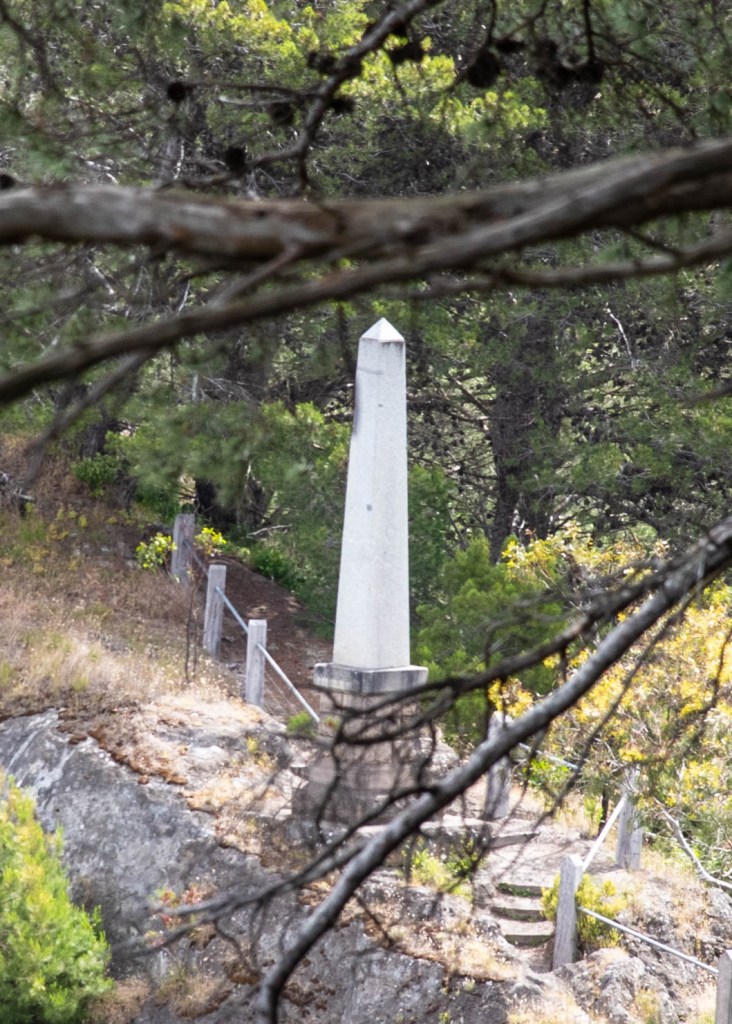
Nearby is an obelisk dedicated to the poet Adam Lindsay Gordon. He was not born in Mount Gambier, nor did he die in Mount Gambier, but apparently at one time he was riding a horse and he leapt over the barricade, landing on a narrow ledge and then jumping back over again. Kind of a “Man from Snowy River” stunt, except Banjo Paterson hadn’t invented him yet. Once you see the sheer cliffs surrounding the lake, you can appreciate how impressive a feat this was. Obelisk-worthy at the very least.
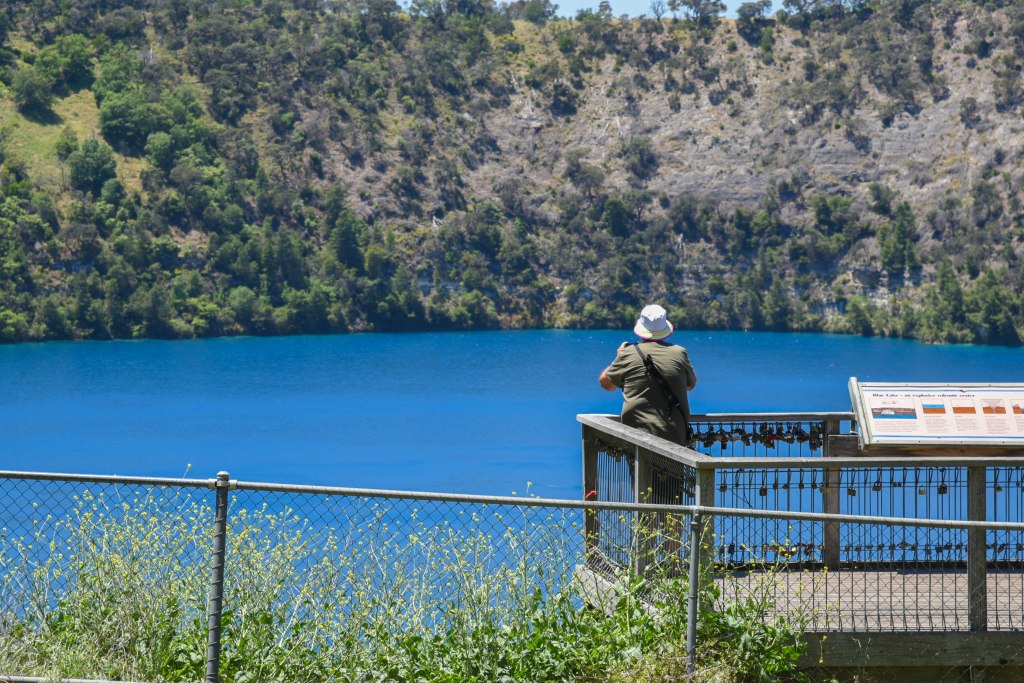
Further along is another viewing platform which appears to be commandeered by lovers, judging by the number of locks which adorn the fence. It just like they do to bridges in Paris – or in Neighbours where countless couples proclaim their love down by the brown sludge that is Lassiter’s Lake.
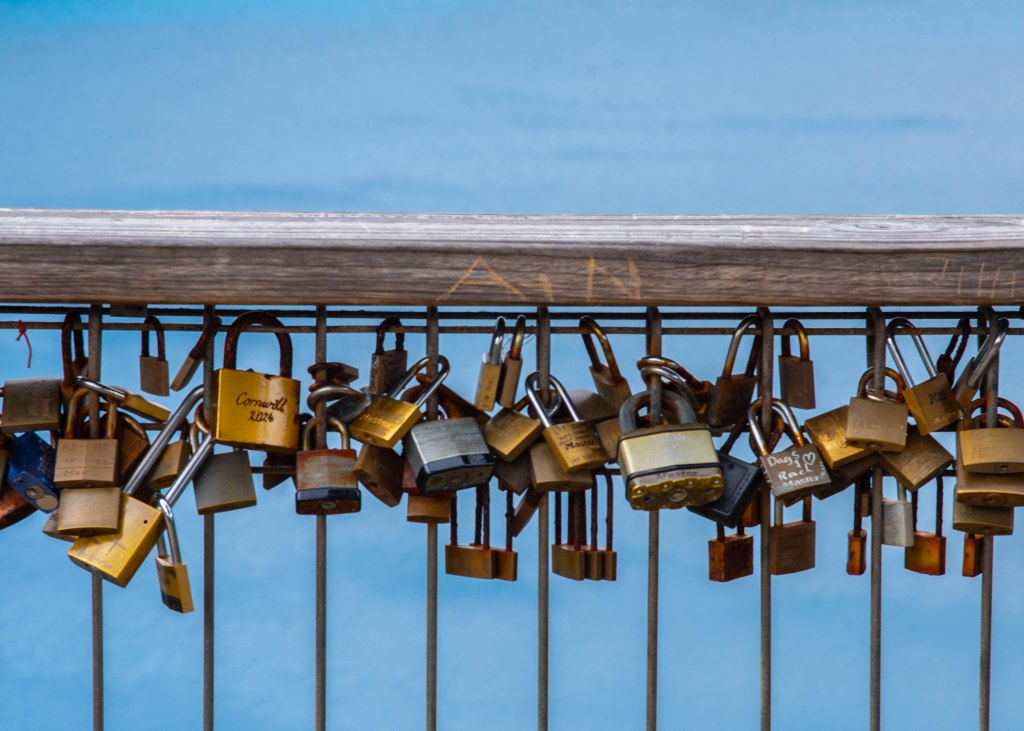
The idea of course is that you get a padlock, etch your name and that of your true love onto the lock, affix it to the fence and throw away the key, symbolising your everlasting love. By that logic, the bottom of Blue Lake must be littered with keys. I must say though, there were a number of couples who had combination locks and if my bloke turned up with one of those, I don’t think I’d be sticking around. Clearly he has commitment issues.
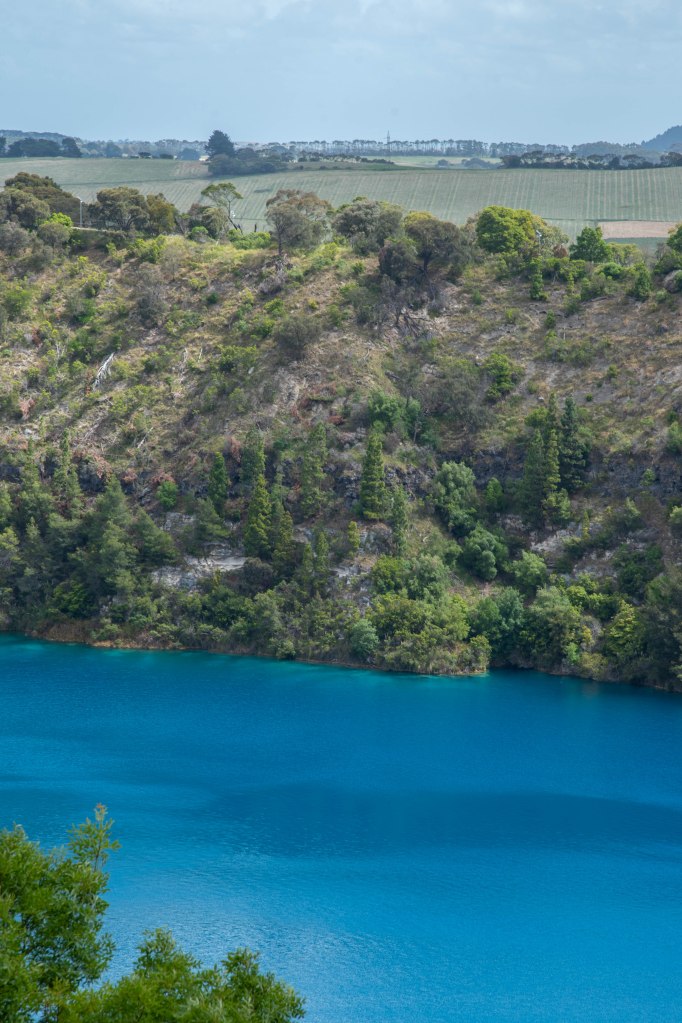
Blue Lake is located in a volcanic crater, but what struck me about this is that the volcano last erupted only four and a half thousand years ago. I say only, because Australia is home to the world’s oldest living culture – around sixty thousand years old – which means that there were people here for the life, and death of that volcano, and the gradual formation of the lake. Of course, I know that people live around volcanoes, but I guess because you typically don’t think of Australia as being a land of fire in that sense, it makes my brain hurt a little bit thinking about it. I am sure the Boandik peoples, the traditional custodians, have stories about it all, but that will have to wait for another visit. I’m sure we will be back to Mount Gambier one day, because if I heard Mark say, “Mount Gambier delivers” one more time, I think I was going to throttle him.
On the other side of the hill there is a second lake – Valley Lake. This one isn’t blue, but you can swim in it, as long as you pay heed to the “Danger: Deep Mud” signs. There is a section with a little beach which must be incredibly popular during the summer months. A third lake – Brown Lake – no longer has any water in it, but this is now beautiful parklands, complete with a frisbee golf course.
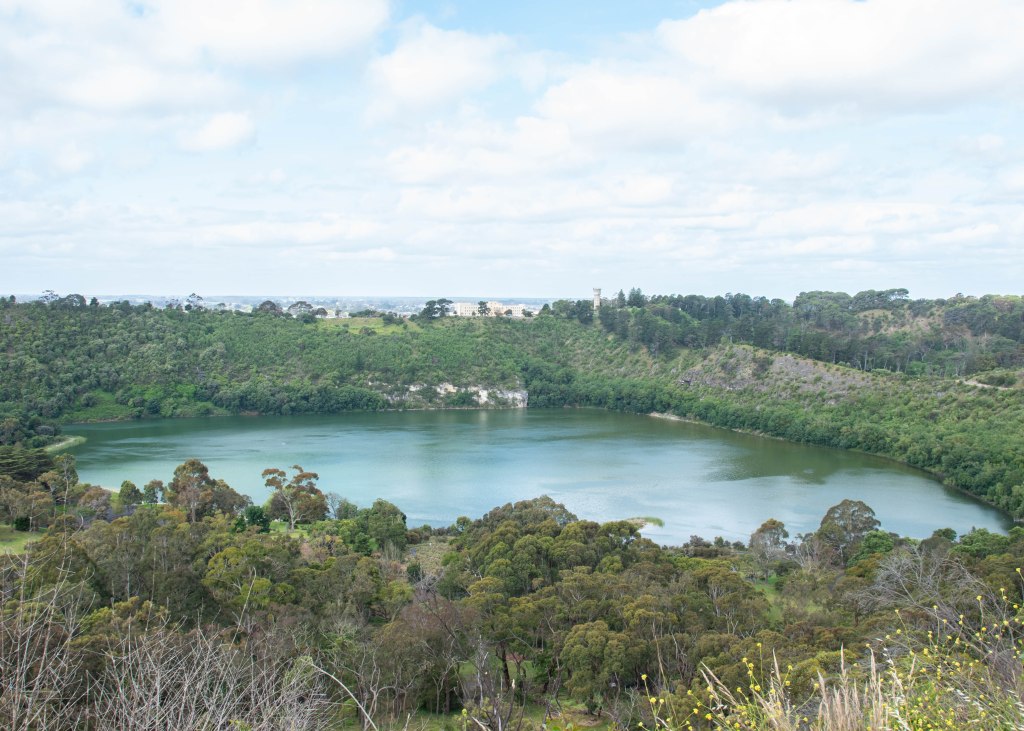
Now if you really want to get a great vantage of not just the lakes, but the city and the farmland beyond, then a hike up to Centenary Tower is a must. My dodgy knees got me half-way up the hill, where there is a conveniently placed bench, making me think that there are a few dodgy knees that attempt the the trek. Mark got all the way up to the base of the tower. He didn’t need it, but a defibrillator was there if he had ! Actually, there are defibrillators all over the place in South Australia, so it must be some sort of government regulation.
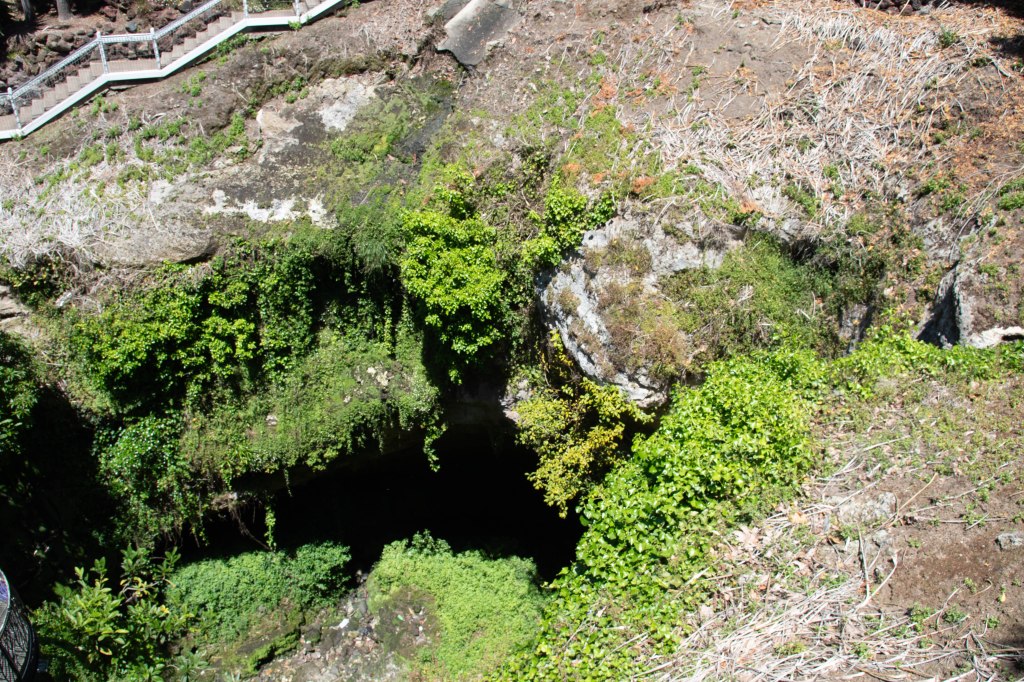
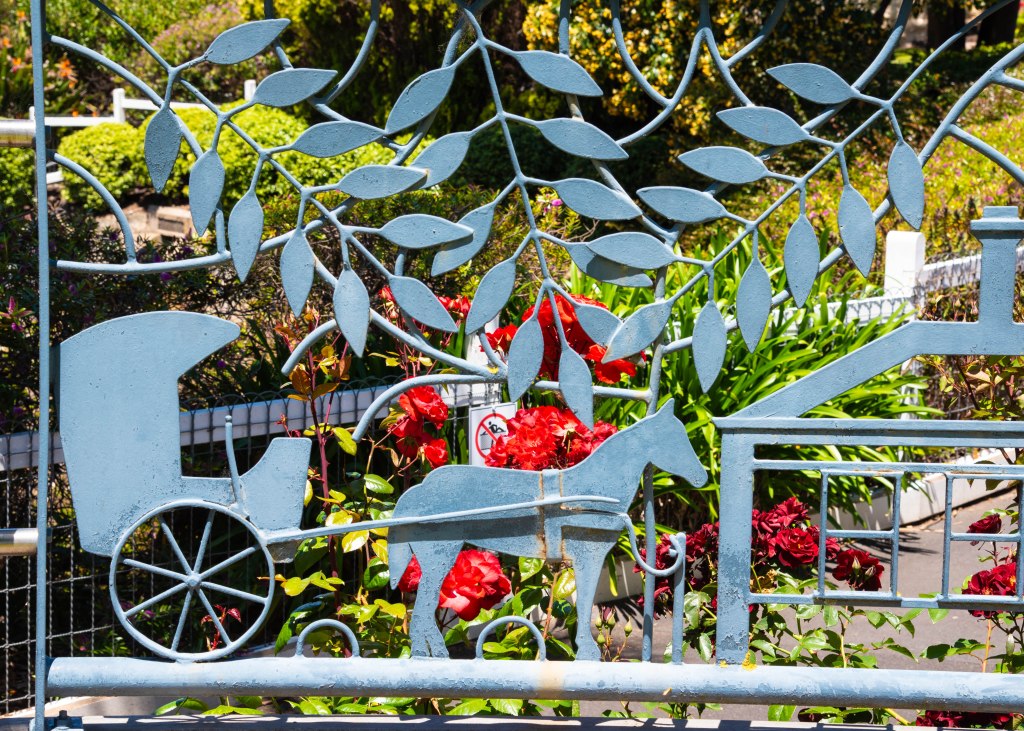
Not only does Mount Gambier have the lakes, but the past volcanic activity has left the landscape dotted with caves and sinkholes. If you go to the tourist information centre, they will point you in the direction of the Umpherston Sinkhole, so most people visit this one first. I would not recommend this, because no other sinkhole will compare! I recommend visiting Cave Garden first. It is located smack bang in the middle of the city centre, right next to the Riddoch Arts and Cultural Centre. The gardens are beautiful, designed in the style of the 1920s with rose gardens mixed with natives. Then you meander down the path and look down and you go “Oh my God! Look at that sink hole!” And then you will probably notice the rubbish that accumulates at the bottom and wonder how often some poor council worker has to abseil down there and clean it out.
There is also this statue that has been commissioned by the council. It’s supposed to represent, “the natural history of the Limestone Coast…palaeontological megafauna , and prehistoric marsupials…”:
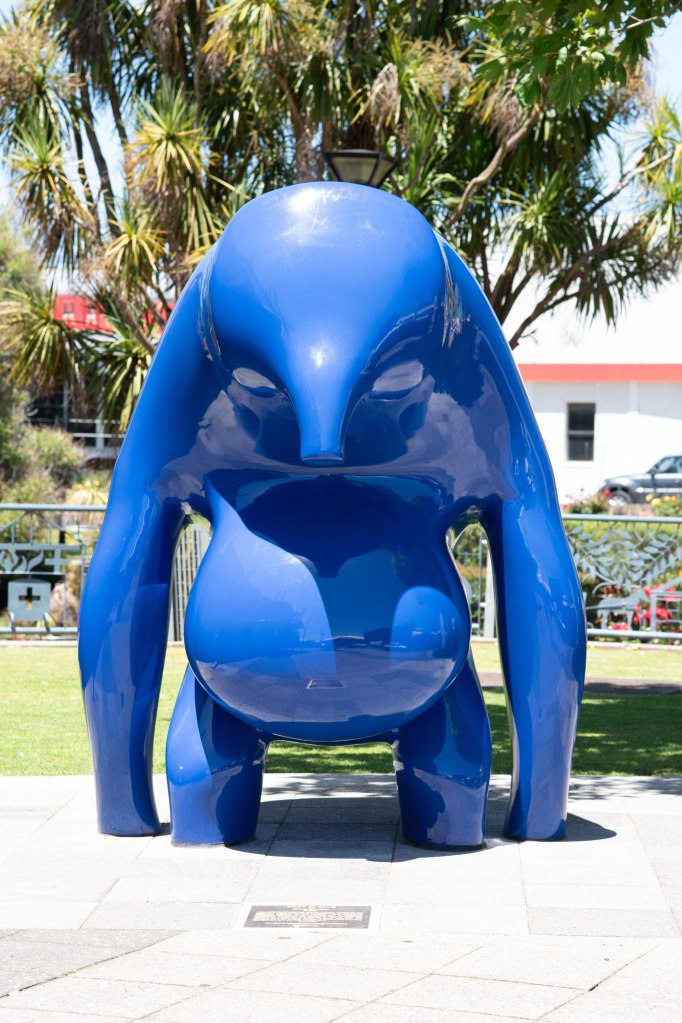
Got it.
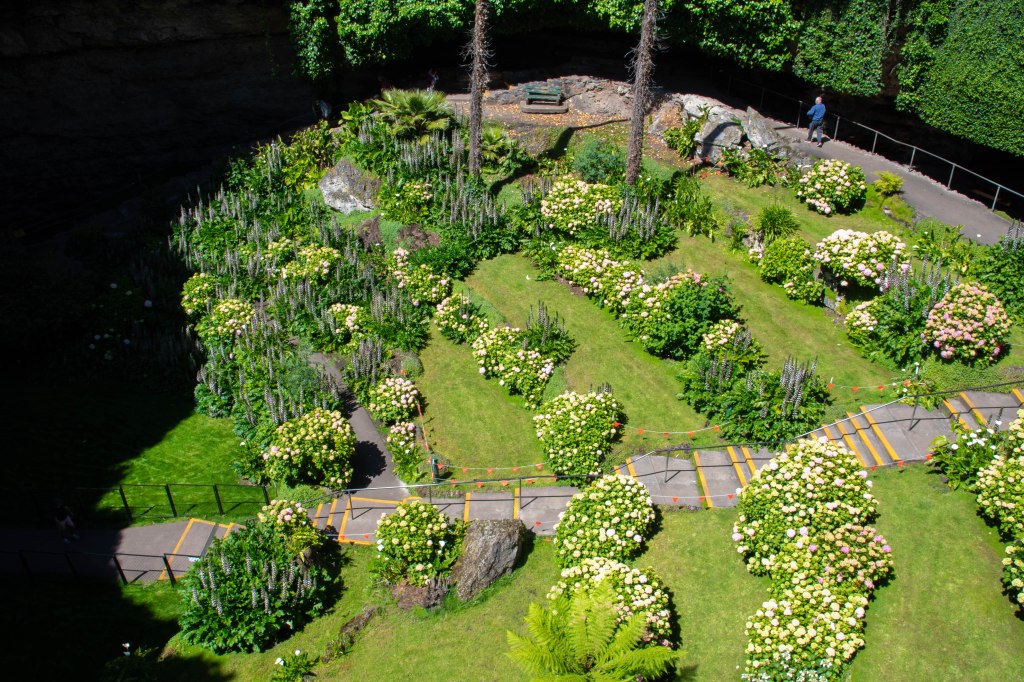
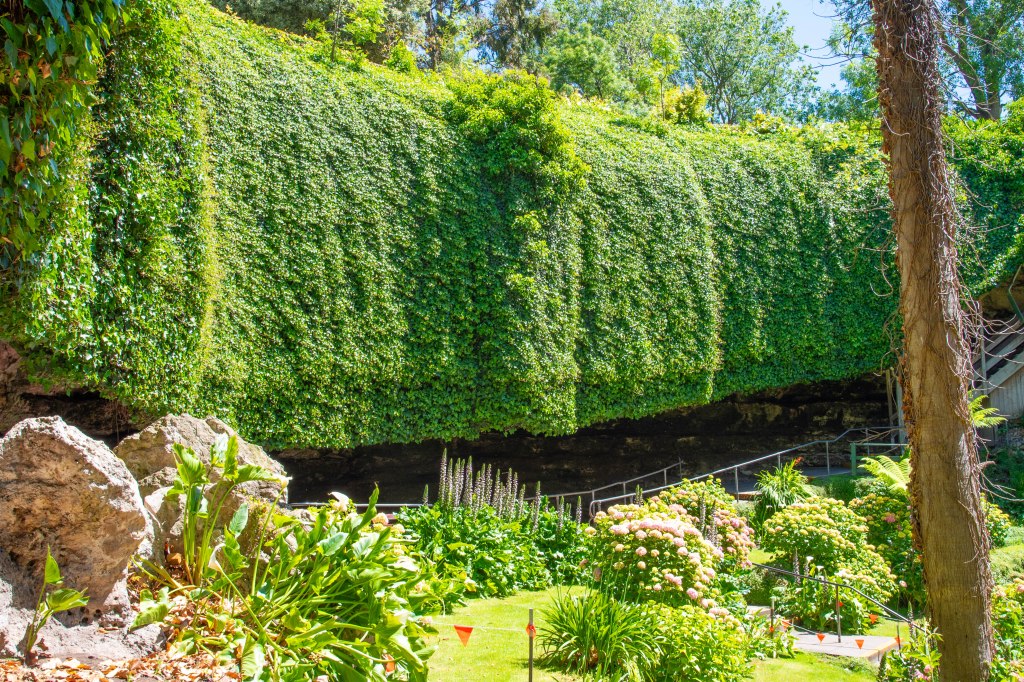
The Umpherston Sinkhole is located on the way out of town, just past the race-course and is surrounded by the sawmill. Sounds lovely, doesn’t it? But in the midst of all of piles of lumber, lies yet another gorgeous park, and in the centre of that is the sinkhole. Wow. Wow. Wow.
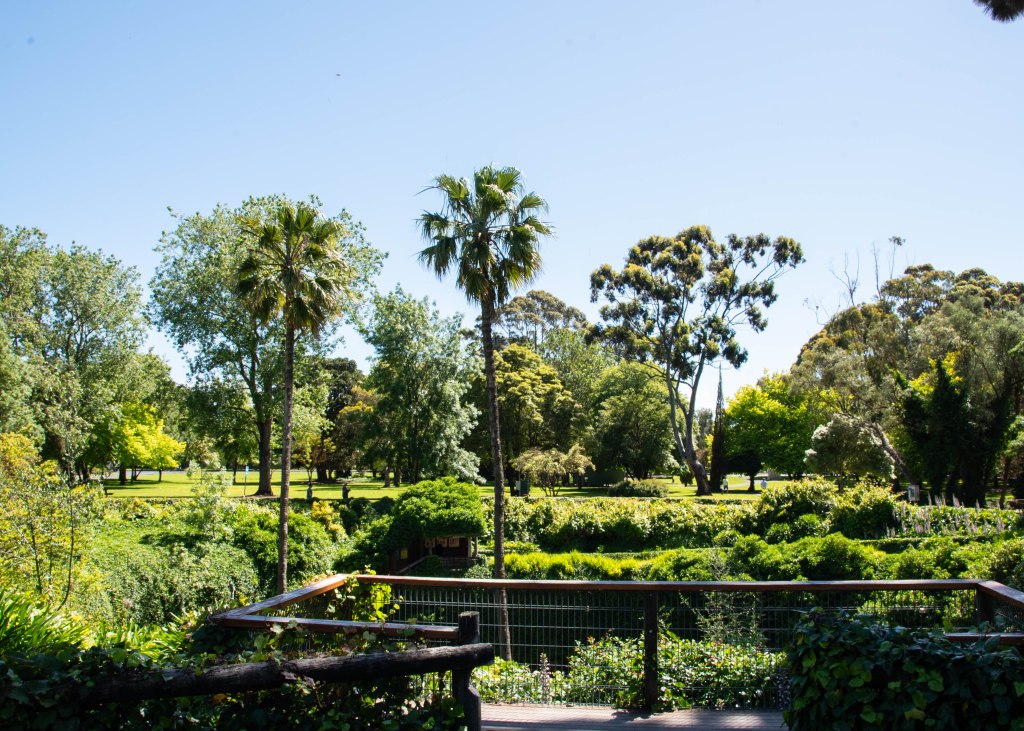
Now apart from its geological history, there is a social history as well which started when James Umpherson bought the land that the sinkhole is now on. At the time a third of the bottom was filled with water, so he had the grand idea of developing it into a garden for the enjoyment of his extended family, so he built terraces and planted flowers and even put a rowboat down there. After he died, the property went through several hands before being acquired by the sawmill. The gardens were left to become overgrown and Umpherson’s Victorian house was demolished in 1964. Then, in the 1970s, someone had the idea to restore the gardens, and a group made up of the sawmill’s social club got to it, volunteering their labour. The sometime in the 1990s, the Mount Gambier Council took it over and now the sinkhole, its terraced gardens of hydrangeas and fuchsia, palm trees and ivy – in Victorian style – are public gardens for all to enjoy for free. The gardens are also literally a hive for bees, who have made their homes in the nooks and crannies of the sinkhole wall, and apparently in the evening you can hand feed to possums, who also make the gardens their home. It really is hard to describe, but it’s breathtaking,

There are other caves and sinkholes around, but again we were limited for time in Mount Gambier, so we decided to take a drive out to Port Mac Donnell (according to the green road sign), Port MacDonnell (according to the Regional Visitor’s Guide) or Port Macdonnell (according to our map). It’s only about a twenty-five-minute drive from Mount Gambier. On the way you pass Mount Schank, another volcanic crater, and the Allenton sink hole which is literally in the middle of the highway (and only accessible to lunatic cave divers by special permit – no thanks!)
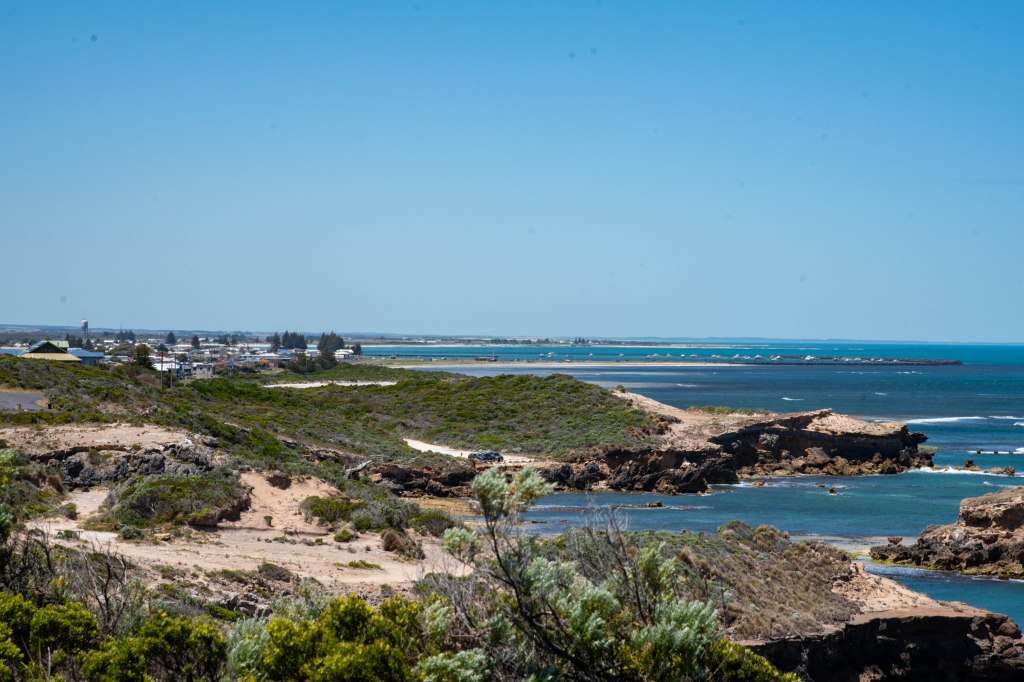
Port MacDonnell is the most southerly point in the state of South Australia and what I would consider to be the start of the shipwreck coast.

While the harbour itself is calm (just as well, as it is home to the largest lobster fishing fleet in South Australia), and there is a long stretch of beach, as you drive out toward the lighthouse, the limestone outcrops are rugged and harsh and the sea angrily throws waves up against them. And the wind! I really felt like I was going to be blown into the ocean!
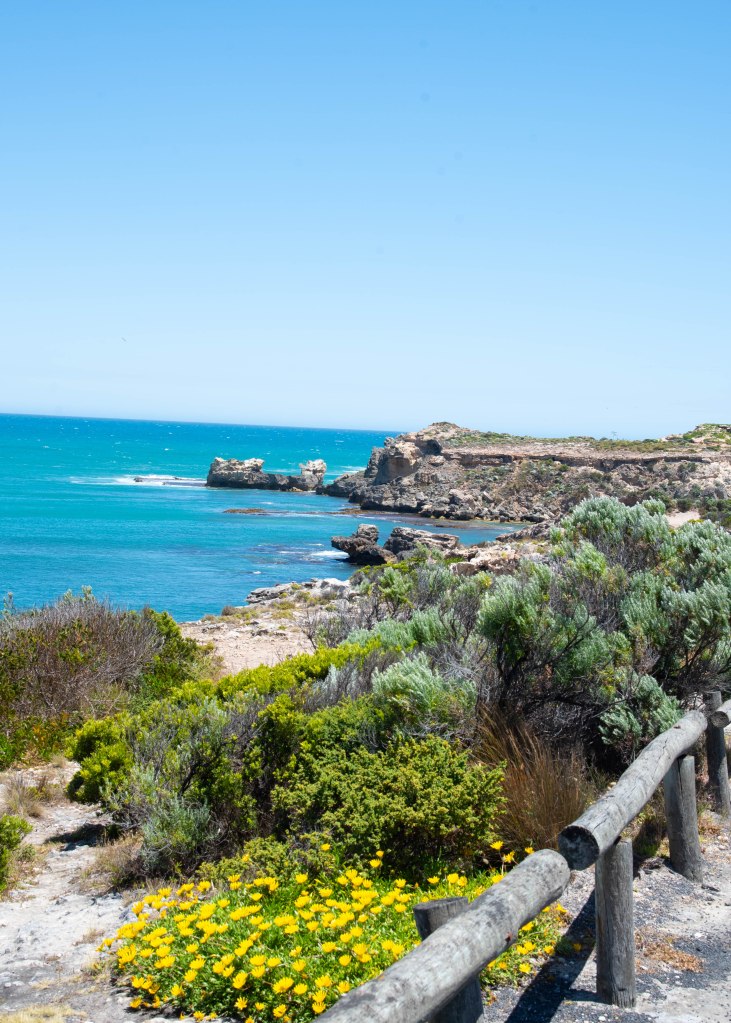
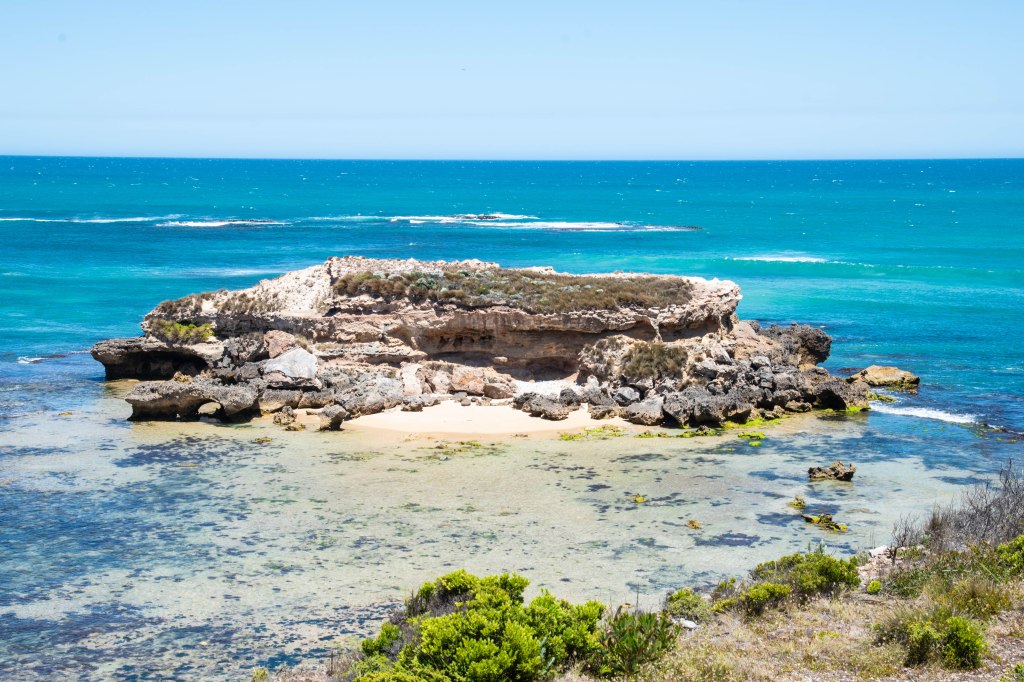

We stopped in for a toasted sanga for a late lunch and then drove back to Mount Gambier. We made one more stop over at yet another sinkhole, Little Blue Lake – a popular swimming hole with locals, with a water temperature which is constantly about twelve degrees all year round. I’m not sure why it’s called Little Blue Lake. Maybe it’s because the water is a little bit blue – like on a cloudless day and if you squint. Or maybe it’s because if you swim in it you come out a little bit blue with teeth chattering from the constant 12 degree water.
And just like that, our day and a half in Mount Gambier was done. And I didn’t even get a chance to go to the coffee shop run by Supercars rookie Kai Allen’s family, because it closes at 1:00 pm. Mind you, we did drive past it, and it looked a little bit too fancy for me anyway. Maybe next time, when I remember to pack something other than thongs or ugg boots.
 The Tent, The Trailer, The Caravan